🌳The Architecture of Organizational Autonomy
Synthesizing Neuroscience, Dharma, Management History, and Digital Agility to Nurture Organizational Autonomy and Creativity
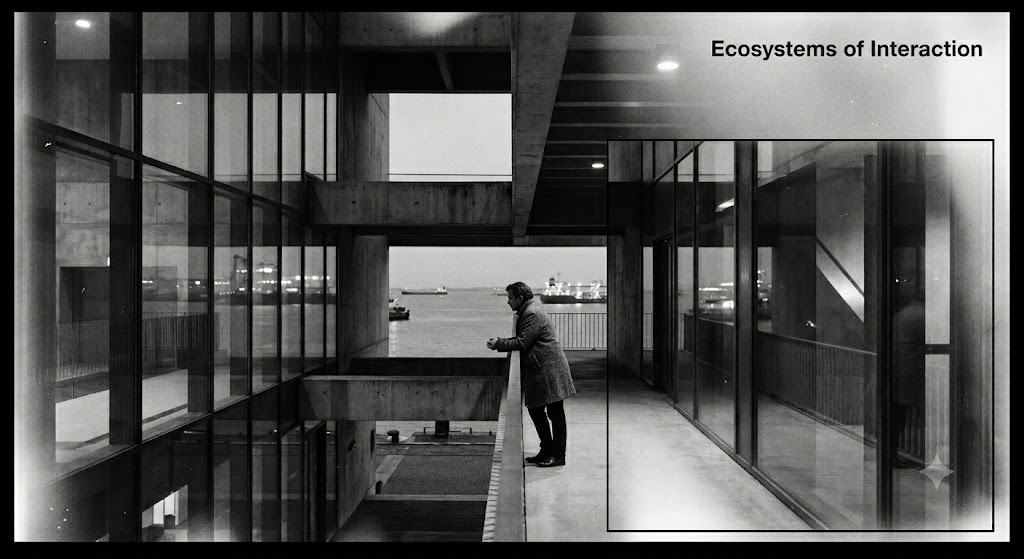
The fundamental architecture of the modern commercial enterprise represents one of the most complex crucibles of human collaboration, tasked with balancing the paradoxical imperatives of systemic, predictable control and disruptive, unconstrained innovation. As the global economic landscape accelerates into an era characterized by exponential technological change and unprecedented market volatility, the traditional mechanisms of corporate governance are increasingly proving inadequate. Organizations are faced with a profound and urgent mandate: to cultivate environments where autonomy and creativity are not merely permitted as occasional exceptions to the rule, but are structurally inevitable. Achieving this elevated state of organizational performance requires transcending conventional business administration paradigms and engaging in a radical, multidisciplinary re-evaluation of how human beings operate, interact, and generate value within collaborative ecosystems.
To comprehensively understand how genuine autonomy and creativity are nurtured within a company, the enterprise must be rigorously examined through a composite lens of four distinct yet deeply intertwined intellectual and empirical perspectives. The first perspective is the historical evolution of organizational management theory, tracing the trajectory from mechanistic bureaucracy and scientific management to the emergence of high-trust, clan-based organizational dynamics. The second perspective relies on the neurobiological framework of hemisphere lateralization—specifically the left-brain and right-brain functional dichotomy—which dictates how human attention fundamentally shapes the perception of reality and interaction with the world. The third perspective incorporates the ontological framework of the Dharma path, focusing on the interplay between relative and ultimate truth, and specifically examining the Direct Approach to non-dual realization as the ultimate source of unconditioned creativity. Finally, the analysis must address the contemporary strategic imperative that dictates "every company should operate like a software company," exploring the intense modern tension between autonomous agile network structures and the dystopian emergence of digital Neo-Taylorism. By synthesizing these four paradigms, a comprehensive, robust blueprint for the enlightened, hyper-creative organization emerges.
The Historical Dialectic of Management and Control: From Iron Cages to Clan Dynamics
To appropriately contextualize the modern struggle for corporate autonomy and the systemic suppression of creativity, it is essential to trace the historical evolution of management theory over the past century. The foundational architecture of the modern corporation was heavily influenced by the German sociologist Max Weber, who articulated the principles of the rational-legal bureaucracy in the late nineteenth and early twentieth centuries [1]. Weber astutely observed that as organizations scaled in the wake of the Industrial Revolution, they required systemic predictability to function, leading to the establishment of rigid hierarchies, formalized rules, specialized division of labor, and highly impersonal decision-making processes [2]. While bureaucracy offered unprecedented efficiency and standardization—allowing massive administrative states and early corporations to manage complex logistics—Weber himself famously warned of the "iron cage" (stahlhartes Gehäuse) of rationalization [3]. He foresaw a state in which the mechanistic drive for efficiency and calculability would eventually strip human labor of its spirit, meaning, and creative vitality, trapping individuals in systems of teleological rigidity [4]. In this bureaucratic paradigm, autonomy is viewed inherently as a systemic risk, and creativity is ruthlessly suppressed in favor of predictable, standardizable compliance.

The first major empirical challenge to this mechanistic, Weberian worldview emerged from the Hawthorne Studies, conducted by the Australian sociologist Elton Mayo at the Western Electric Company’s Hawthorne plant in Chicago between 1927 and 1932 [5]. Originally designed within the paradigm of scientific management to measure the direct impact of physical working conditions—specifically lighting levels—on worker productivity, the experiments yielded a paradigm-shifting anomaly. To the profound amazement of the researchers, productivity increased regardless of whether the lighting was improved or deliberately diminished [6]. This phenomenon, subsequently termed the "Hawthorne Effect," revealed that workers were not merely rational-economic cogs responding to physical environmental variables, but rather complex social beings who responded positively to attention, team solidarity, and a sense of inclusion in the experimental process [7]. The Hawthorne Studies catalyzed the Human Relations Movement, introducing the radical notion that human psychology, social dynamics, and informal group norms were critical, primary drivers of organizational output, fundamentally challenging the premise that workers must be treated as mechanical inputs [8].
Building directly upon this psychological awakening in the post-war era, the social psychologist Douglas McGregor articulated his highly influential Theory X and Theory Y, creating a permanent philosophical bifurcation in management theory regarding the fundamental nature of human motivation [9]. Theory X represents the direct continuation of the mechanistic, authoritarian paradigm of early industrialization. It assumes that human beings inherently dislike work, avoid responsibility whenever possible, lack inherent ambition, and must therefore be actively coerced, heavily monitored, and threatened with punishment to achieve organizational goals [10]. Under Theory X assumptions, management is fundamentally adversarial, and pervasive surveillance is the primary tool of operational control [11].
Conversely, Theory Y posits a radically different anthropology. It asserts that the expenditure of physical and mental effort in work is as natural to human beings as play or rest [12]. Theory Y assumes that under the proper systemic conditions, individuals do not merely accept but actively seek responsibility, possessing a high degree of imagination, ingenuity, and creative problem-solving ability that is widely distributed across the population, not just concentrated in executive leadership [13]. Theory Y managers systematically cultivate environments of trust, viewing employees as self-directed, autonomous assets whose personal drive for self-actualization can be aligned seamlessly with overarching organizational success [14].
In the 1980s, facing the immense competitive pressure of the Japanese economic miracle, the management scholar William Ouchi extended McGregor’s work by introducing Theory Z, frequently referred to as a hybrid of American and Japanese management styles adapted for Western enterprises [15]. Theory Z transcends the binary limitations of X and Y by focusing on the holistic, long-term relationship between the organization and the employee [16]. Ouchi advocated for paradigms characterized by long-term or lifetime employment, consensual and collective decision-making, implicit control mechanisms, slow evaluation and promotion processes, and a deep, holistic concern for the well-being of the worker, including their life outside the corporate boundaries [17].

Crucially, to understand the structural implementation of Theory Z, one must examine Ouchi’s seminal 1979 academic framework detailing the three distinct mechanisms of organizational control: markets, bureaucracies, and clans [18]. Markets utilize price mechanisms and are highly efficient when performance is easily measured but goals between parties are completely incongruent. Bureaucracies rely on explicit rules, surveillance, and hierarchical authority, suitable when both goal incongruence and performance ambiguity are moderately high [19]. However, Ouchi posited that when performance ambiguity is extremely high—such as in highly creative, complex knowledge work, software engineering, or strategic innovation—bureaucracies completely fail because the work cannot be adequately measured by standard rules [20].
In these highly ambiguous environments, Ouchi argued that the "clan" mechanism is strictly required [21]. Clan control relies not on explicit rules or surveillance, but on a deep socialization process, a shared corporate philosophy, and profound mutual trust [22]. In a Theory Z clan culture, explicit bureaucratic rules are minimized; instead, workers are granted immense autonomy because their internalized values perfectly align with the organization's overarching mission [23]. The historical transition from the Weberian bureaucracy (Theory X/Markets) to Ouchi’s clan structure (Theory Y/Theory Z) represents the structural prerequisite for unlocking deep organizational creativity. Without the psychological safety and goal alignment provided by the clan mechanism, employees will inevitably revert to the self-protective, uncreative behaviors predicted by the iron cage of bureaucracy.
The Neurobiological Architecture of the Enterprise: Hemisphere Theory
While the history of management outlines the structural and sociological evolution of the firm, understanding the precise, granular mechanisms of human creativity and control requires descending into the neurobiological architecture of the human brain. The popular cultural understanding of the left-brain/right-brain divide—which reductively and inaccurately claims the left brain is exclusively logical, mathematical, and cold, while the right brain is exclusively creative, emotional, and artistic—has been largely discredited by modern neuroscience [24]. Both hemispheres are fundamentally involved in reason, language, emotion, and visual processing [25]. However, this oversimplification has unfortunately obscured a profound neurological reality regarding how human beings attend to the world.
Psychiatrist, philosopher, and neuroscientist Iain McGilchrist, in his seminal, exhaustive work The Master and His Emissary: The Divided Brain and the Making of the Western World, presents a deeply nuanced, evidence-based framework for hemisphere lateralization [26]. McGilchrist argues that the crucial distinction between the hemispheres is not about what they do, but rather how they do it [27]. The two hemispheres provide two fundamentally different, and often competing, modes of attention, effectively bringing two distinct, incompatible "worlds" into being [28].
The left hemisphere's primary evolutionary function is to focus narrowly, sharply, and exclusively on specific details, enabling the grasping, manipulation, and utilization of objects, such as a bird identifying a seed against a background [29]. It decontextualizes information, breaks holistic entities into manageable parts, categorizes phenomena, and relies on explicit, abstracted representations of reality [30]. Its fundamental motivation is utility, power, and control [31]. The left hemisphere treats the world as an inanimate mechanism; it prefers the known, the predictable, and the systematic [32]. Furthermore, the left hemisphere is prone to confabulation; when faced with data that contradicts its explicit models, it will frequently deny reality rather than update its paradigm, displaying a remarkable capacity for dogmatic rigidity [33].
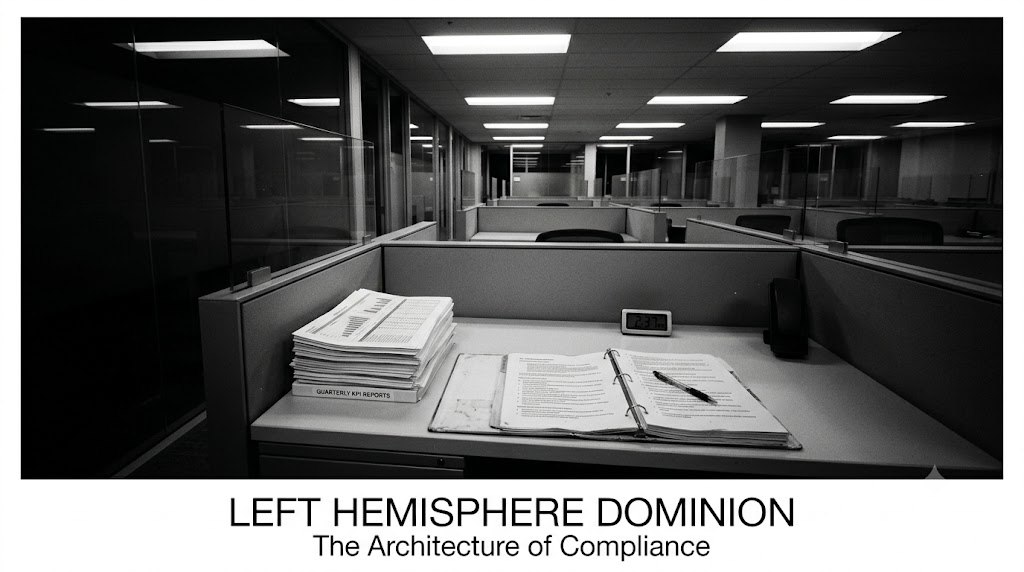
In the corporate context, the left hemisphere is the literal neurological engine of Weberian bureaucracy, Taylorism, and Theory X management [34]. It demands predictability, relies entirely on quantifiable metrics, and views employees, supply chains, and processes as mechanistic components to be continuously optimized [35]. A corporate culture dominated by the left hemisphere is obsessed with explicit rules, relentless reporting, key performance indicators (KPIs), and rigid compliance architectures [36].
Conversely, the right hemisphere provides sustained, broad, open, and vigilant attention to the world [37]. It perceives reality not as a collection of isolated parts, but as a fluid, interconnected, and living gestalt [38]. The right hemisphere is deeply context-aware, highly attuned to implicit meaning, metaphor, body language, facial expressions, and the living reality of interpersonal relationships [39]. Crucially for the modern enterprise, the right hemisphere tolerates ambiguity, paradox, and the unknown, which makes it the true anatomical seat of profound creativity, empathy, and holistic strategic understanding [40]. In organizational terms, the right hemisphere provides the cognitive foundation for McGregor's Theory Y and Ouchi's Theory Z [41]. It fosters the high-trust, intuitive, and relational dynamics required for clan control, autonomous innovation, and psychological safety [42].
McGilchrist’s central thesis—and the source of his book’s title, derived from a philosophical fable attributed to Nietzsche—is that the right hemisphere should fundamentally be the "Master" of the human cognitive system [43]. The right hemisphere possesses the broad vision, the grounding in living reality, and the understanding of ultimate meaning [44]. The left hemisphere should act as its "Emissary," tasked with executing specific, mechanical details, analyzing parts, and achieving utilitarian goals, before returning its analytical findings back to the holistic perspective of the Master for integration [45].
However, McGilchrist convincingly argues that throughout the history of the Western world, and particularly in contemporary times, the Emissary has usurped the Master [46]. The left hemisphere, inherently blind to what it cannot explicitly measure or categorize, has constructed a corporate and societal world entirely in its own image: a highly administered, hyper-rationalized society drowning in bureaucracy, rigid rules, and algorithmic control, resulting in a profound loss of meaning and a continuous metacrisis of human flourishing [47].
When a company operates entirely under left-hemisphere dominance, it exhibits profound organizational pathology. Innovation is suffocated because the left hemisphere fears the unpredictable and the unknown—the exact psychological spaces where true creativity resides [48]. Autonomy is eradicated because the left hemisphere demands centralized control, explicit surveillance, and documented justification for every action, resulting in the proliferation of administrative bloat [49]. To nurture genuine creativity, modern enterprises must deliberately engineer a cognitive re-balancing. They must design organizational structures that actively constrain the bureaucratic overreach of the "Emissary" and structurally prioritize the relational, context-aware, and holistic vision of the "Master" [50]. This neurological rebalancing requires moving away from pure metric-driven evaluation and returning to judgment, wisdom, and clan-based trust.
The Ontological Foundation: Dharma, Non-Duality, and the Direct Path
To push the understanding of organizational autonomy beyond sociology and neuroscience, one must engage with the deepest ontological dimensions of human consciousness. The ancient philosophical frameworks of the Dharma, particularly the Buddhist doctrine of the Two Truths and the non-dual realization articulated through the Direct Path to Enlightenment, provide a profound, transformative architecture for understanding the ultimate source of human creativity and the eradication of workplace friction.
In Buddhist philosophy, the nature of reality is understood through the epistemological paradigm of Relative Truth (Samvriti-satya) and Ultimate Truth (Paramartha-satya) [51]. Relative truth governs the conventional, phenomenal world. It is the realm of time, space, cause and effect, language, duality, and transactional relationships [52]. In a corporate context, relative truth encompasses market share, profit and loss statements, organizational charts, software architecture, and strategic deliverables. It is the necessary, pragmatic layer required for functioning in the material world. Ultimate truth, however, points to the inherent emptiness (Shunyata) of all phenomena, recognizing that no object, self, or concept exists independently or inherently [53]. In non-dual traditions, ultimate truth is the direct recognition of unconditioned awareness or shared consciousness as the fundamental, irreducible substrate of all reality [54]. These two truths are not in opposition; rather, they are mutually confirming and inseparable [55]. As articulated in the Tiantai Buddhist tradition, the full realization of reality requires seeing the ultimate seamlessly pervading the relative, recognizing that "form is emptiness, emptiness is form" [56].
In the context of the modern workplace, a toxic, low-creativity, highly bureaucratic environment is one that is completely trapped in relative truth. Employees identify exclusively with their professional roles, their performance metrics, their corporate titles, and their egoic achievements. This localized, separate sense of self is fundamentally fragile, deeply anxious, and inherently isolated [57]. It operates perpetually in a state of seeking validation or defending against perceived threats [58]. It is precisely this anxious, contracted psychological state that necessitates Theory X management and left-hemisphere control structures; when individuals operate from a place of deep fear and separation, they require external mechanisms to enforce cooperation.
The profound remedy to this systemic dysfunction lies in the experiential integration of the Ultimate Truth, best articulated in contemporary times by teachers of the Direct Path, such as Rupert Spira, drawing on the ancient lineage of Ramana Maharshi, Advaita Vedanta, and Kashmir Shaivism [59]. Traditional, progressive spiritual paths often prescribe rigorous, gradual purification over lifetimes to attain a future state of enlightenment [60]. However, the Direct Path completely bypasses this progressive accumulation—which ironically mimics the bureaucratic, left-hemisphere mindset of "doing" work to achieve a future goal—and points radically and directly to the immediate, present-moment reality of awareness itself [61].
The Direct Path asks the practitioner to execute a fundamental shift in attention. Rather than focusing on the objective content of experience (the thoughts, the anxieties, the corporate pressures, the bodily sensations), the individual turns their attention to the simple, self-evident fact of "being aware" [62]. Spira articulates this as a two-fold journey. The first phase is the "inward-facing path," which involves investigating the essential nature of the mind and recognizing that one's true identity is not a separate, limited, vulnerable ego located in a body, but rather the open, unlimited, immaculate presence of awareness in which all experience arises [63]. Spira often utilizes the analogy of an actor playing King Lear: the actor may become deeply engrossed in the tragedy of the play, experiencing profound suffering, but upon recognizing their true identity as the actor, the suffering vanishes, even as the play continues [64]. Because this fundamental awareness is intrinsically whole and unharmable, it is the source of inherent peace and uncaused happiness [65].
Once this profound recognition stabilizes, the practitioner engages in the "outward-facing" or tantric path [66]. This involves turning back toward the relative world—the workplace, corporate relationships, creative endeavors, and software development—and realigning all thoughts, feelings, and actions with the deeply felt understanding of shared being [67]. When a worker operates from this space of non-dual awareness, the implications for organizational dynamics are staggering. Because their fundamental sense of peace, identity, and happiness is no longer desperately dependent on the unpredictable outcomes of their corporate tasks or the approval of management, they are completely liberated from the paralyzing fear of failure.
Creativity, in the non-dual paradigm, is not an exhausting exertion of the separate ego trying to prove its worth or establish its survival [68]. Instead, when the mind is free from the cramp of separation and the anxiety of relative truth, true individuality and spontaneous creativity flourish effortlessly [69]. Action becomes a joyful expression of "being" rather than a frantic, defensive mode of "doing" [70]. If an organization's leadership can cultivate a culture grounded in this ultimate truth—operating with deep psychological safety, explicitly honoring the shared humanity of its workforce, and fostering an environment of unconditioned trust—they inadvertently build the ultimate manifestation of Ouchi's Theory Z clan. The company becomes a vast vessel where the relative, transactional tasks of commerce are executed with supreme precision, but are infused with the lightness, deep connection, and profound creative insight derived from the ultimate truth of shared being.
The Software-Centric Paradigm: Autonomy vs. Digital Neo-Taylorism

The philosophical depth of the Dharma, the neurobiological realities of hemisphere lateralization, and the historical frameworks of management autonomy must ultimately be applied to the contemporary, hyper-accelerated economic reality. Today, the dominant organizational paradigm across all global sectors is encapsulated by the strategic maxim: "Every company is a software company" [71]. Originally coined by venture capitalist Marc Andreessen over a decade ago as "software is eating the world," the premise has evolved from a technological prediction into a fundamental, unavoidable business reality [72]. Whether an enterprise ostensibly operates in retail, commercial banking, automotive manufacturing, logistics, or healthcare, remaining competitive requires migrating from a legacy, analog operating model to a digital-first, software-centric architecture [73].
To truly operate like a software company does not merely mean purchasing digital tools or migrating infrastructure to the cloud; it mandates a complete structural, cultural, and operational metamorphosis [74]. Software development, by its very nature, is a domain of extreme complexity, high performance ambiguity, and rapid market fluctuation [75]. Traditional, hierarchical, Theory X management—relying on heavy upfront planning and strict bureaucratic control—is fatal in this environment [76]. Consequently, the most successful software organizations utilize Agile methodologies, systematically restructuring their human capital into small, cross-functional, highly autonomous, self-governing teams [77].
These Agile teams are typically led by empowered product managers who operate as "mini-CEOs," moving with the speed, adaptability, and autonomy of independent startups [78]. Decision-making is radically decentralized, pushing authority to the absolute edges of the organization where the technical information and customer feedback actually reside [79]. This architecture heavily relies on continuous learning, blameless post-mortems, and a culture that explicitly views failure not as a punishable offense, but as a necessary, valuable stepping stone to rapid innovation [80]. In its purest, most functional form, the Agile software enterprise is the modern, digital incarnation of Ouchi's Theory Z—a high-trust clan operating in a state of rapid, holistic adaptation, perfectly suited to the right hemisphere's capacity for managing complexity and ambiguity.
However, the transition to a software-centric model harbors a profound, systemic, and imminent danger: the rise of Digital Taylorism, frequently referred to as Neo-Taylorism [81]. As companies rapidly digitize their workflows, management gains unprecedented, microscopic capabilities to monitor, track, and measure human behavior in real-time [82]. The very platforms and software tools designed to facilitate agile collaboration and remote work can effortlessly be weaponized into architectures of hyper-surveillance [83].
In a dark regression to early twentieth-century scientific management, Neo-Taylorism utilizes big data, cloud computing, and artificial intelligence to deconstruct complex knowledge work into highly measurable micro-tasks [84]. Algorithms meticulously track keyboard strokes, active screen time, communication metadata, and physical location to generate predictive models of worker efficiency [85]. Software developers themselves—the very architects of the digital age—are increasingly subjected to relentless, automated metrics such as lines of code written, commit frequencies, and strict adherence to specific quantitative targets [86].
A prime example of this metric-driven culture is the widespread adoption of DORA (DevOps Research and Assessment) metrics, which track Deployment Frequency, Lead Time for Changes, Mean Time to Recovery (MTTR), and Change Failure Rate [87]. While DORA metrics were originally researched and designed to measure the holistic health, stability, and velocity of an organizational system, left-hemisphere dominant management frequently corrupts them [88]. Instead of measuring the system, management uses these metrics as tools for individual surveillance, ranking, and punitive control, recreating the iron cage of bureaucracy in a digital format [89].
This algorithmic micromanagement represents the ultimate subjugation of the right hemisphere's Master by the left hemisphere's Emissary [90]. It strips the soul out of the work, replacing the organic, trusting, meaning-rich dynamics of the clan with a sterile, hyper-bureaucratic, digital panopticon [91]. The psychological toll of Neo-Taylorism is severe, routinely resulting in developer burnout, intense chronic anxiety, and the complete erosion of psychological safety [92]. Furthermore, it fundamentally destroys creativity. When human beings are constantly monitored and evaluated against rigid, quantitative, left-brained metrics, they instinctively default to safe, predictable, and compliant behaviors [93]. They systematically avoid the risk-taking, the idle contemplation, and the ambiguous exploration required for genuine, non-linear innovation [94].
To successfully operate as a software company without succumbing to the dystopian reality of Neo-Taylorism, organizations must undergo a profound paradigm shift in how they utilize data. They must use metrics specifically to identify and clear systemic roadblocks—measuring opportunities and overall system health rather than weaponizing data for individual output surveillance [95]. They must supplement operational data with frameworks like SPACE (Satisfaction, Performance, Activity, Communication/Collaboration, Efficiency), which explicitly prioritize developer well-being, joy, and team cohesion as equal in importance to deployment velocity [96]. True business agility requires leaders to manage the complex system, not micro-manage the people, thereby allowing the workforce the cognitive liberty and trust required to operate with true autonomy [97].
Integrated Synthesis: A Unified Architecture for the Creative Enterprise

To achieve sustained competitive advantage and foster an environment of profound human flourishing, modern organizations must weave these four distinct perspectives into a unified, coherent operational philosophy. The rigorous synthesis of management history, neurological hemisphere theory, non-dual ontology, and software-centric agility reveals striking, undeniable parallel structures. This multidisciplinary alignment demonstrates conclusively that human creativity and autonomy require the exact same fundamental environmental conditions, regardless of whether the lens applied is sociological, biological, philosophical, or technological.
The following table illustrates the conceptual alignment across these four macro-paradigms, clearly delineating the forces that crush creativity versus those that nurture it:
| Perspective | The Control Paradigm (Stifles Creativity) | The Autonomy Paradigm (Nurtures Creativity) |
|---|---|---|
| Management History | Weberian Bureaucracy & Theory X: Relies on market forces or strict hierarchies. Assumes humans are lazy and require external coercion, monitoring, and punishment. | Human Relations & Theory Z (Clans): Assumes humans naturally seek responsibility (Theory Y). Relies on deep trust, socialization, and holistic well-being to align goals. |
| Neuroscience (McGilchrist) | Left Hemisphere Dominance (The Emissary): Narrow focus on quantifiable metrics, categorization, manipulation, and control. Fears ambiguity. Prone to confabulation. | Right Hemisphere Dominance (The Master): Broad, vigilant focus on holistic context, relational dynamics, implicit meaning, empathy, and the tolerance of paradox. |
| Ontology (Dharma & Spira) | Entanglement in Relative Truth: Identification with the anxious, separate ego. Driven by the exhausting, fearful effort of "doing" to secure value and defend identity. | Realization of Ultimate Truth (Direct Path): Grounded in unconditioned, shared awareness. Action and creativity flow effortlessly from a peaceful state of "being." |
| Modern Business Strategy | Digital Neo-Taylorism: Algorithmic surveillance, micromanagement via corrupted DORA metrics. Treats humans as mechanistic cogs in a digital factory, leading to burnout. | Agile Software Centricity: Empowered product managers, autonomous cross-functional networks, decentralized authority, psychological safety, and blameless post-mortems. |
Building a company that genuinely nurtures autonomy and creativity requires active, continuous resistance against the gravitational pull of the left hemisphere. Left unchecked, the natural lifecycle of any human organization—much like the historical epochs of the Western world described by McGilchrist—will naturally drift toward bureaucracy, rationalization, and the comforting but sterile illusion of absolute control [98]. As organizations scale, the administrative Emissary continually attempts to usurp the creative Master.
To proactively counter this entropic drift, organizational leadership must actively and intentionally design "Clan" architectures [99]. This involves creating an immensely strong, implicitly understood cultural mission (representing the Right Hemisphere and Ultimate Truth) that allows for extreme decentralization of tactical execution (representing the Left Hemisphere and Relative Truth) [100]. By legally and culturally committing to the holistic well-being of the employee—recognizing them not merely as "human capital" to be extracted, but as expressions of a shared, infinite consciousness—management strips away the existential anxiety that fuels workplace friction and office politics.
When the workplace is explicitly treated as a container for the "outward-facing" tantric path, where everyday corporate activities, coding sessions, and strategic meetings are approached not as threats to the fragile ego but as spontaneous, joyous expressions of creative energy, the traditional need for Theory X coercion evaporates entirely [101]. Operating like a software company is therefore not fundamentally a technological mandate, but a profound cultural and psychological one [102]. It demands that management explicitly trusts the inherent desire of human beings to contribute meaningfully (Theory Y), provided they are given the psychological safety to do so without the constant, looming threat of algorithmic surveillance (Neo-Taylorism) [103]. In this enlightened architecture, metrics, software, and administrative processes must serve the flourishing of the human being, just as the Emissary must faithfully serve the Master [104].
Conclusion
The pursuit of autonomy and creativity within the modern enterprise is not a superficial matter of implementing trendy human resources initiatives, installing ping-pong tables, or purchasing agile project management software; it is a profound structural, neurobiological, and philosophical undertaking. As the global demand for rapid, disruptive innovation intensifies, companies that stubbornly rely on the outdated mechanisms of Weberian bureaucracy, Theory X coercion, and left-hemisphere hyper-rationalization will inevitably stagnate and fail. Furthermore, the cynical attempt to digitize these obsolete models through Neo-Taylorist algorithmic surveillance only accelerates organizational decay, fundamentally crushing the cognitive liberty and psychological safety required for deep, transformative creative work.
True organizational vitality requires a courageous synthesis of profound trust, neurological balance, and ontological awareness. By embracing the principles of Ouchi's Theory Z clan control, organizations can establish the unbreakable psychological safety necessary for radical risk-taking. By structurally prioritizing the holistic, context-aware, empathetic perspective of the right hemisphere, leadership can ensure that administrative rules and digital metrics serve human flourishing rather than dictate it. By infusing the corporate culture with the profound insights of the Direct Path—recognizing the unconditioned, shared being that connects all stakeholders—work ceases to be an anxious, exhausting pursuit of egoic validation. Instead, it transforms into a joyful, effortless expression of boundless creativity. Ultimately, to operate optimally as a modern software-centric enterprise is to build a deeply human-centric ecosystem: one where the complex, relative demands of the digital market are met with absolute precision, but are guided firmly and lovingly by the ultimate truth of our shared human potential.
Works Cited
] - https://mbartugs.wordpress.com/2016/10/19/the-history-and-evolution-of-management-thought/ ↩︎
] - https://www.encyclopedia.com/social-sciences-and-law/economics-business-and-labor/businesses-and-occupations/organization-theory ↩︎
] - https://blogs.icrc.org/law-and-policy/2020/01/09/reflections-humanitarian-bureaucrat/ ↩︎
Iain McGilchrist's New Era - https://firstthings.com/iain-mcgilchrists-new-era/ ↩︎
] - https://www.slideshare.net/slideshow/chapter-4-management-theory-237417969/237417969 ↩︎
] - https://www.libs.uga.edu/reserves/docs/main-archive/2022/main-fall2022/briggs/macro%20social%20work%20chapter%207.pdf ↩︎
HM-104 Management Principles - https://uou.ac.in/sites/default/files/slm/HM-104.pdf ↩︎
] - https://www.tsw.co.uk/insights/mcgregors-theory-x-vs-theory-y/ ↩︎
] - https://positivepsychology.com/theory-x-and-theory-y/ ↩︎
] - https://www.velorahr.com/en/post/x-y-z-theories-of-human-resources ↩︎
Motivating Employees Overview - https://louis.pressbooks.pub/introbusinessadmin/chapter/motivating-employees/ ↩︎
] - https://courses.lumenlearning.com/suny-hccc-introbusiness/chapter/reading-douglas-mcgregors-theory-x-and-theory-y-2/ ↩︎
] - https://positivepsychology.com/theory-x-and-theory-y/ ↩︎
] - https://intensescholar.com/leadership/theory-z-william-ouchi/ ↩︎
] - https://positivepsychology.com/theory-x-and-theory-y/ ↩︎
] - https://www.scribd.com/document/374948362/William-Ouchi-s-Theory-Z-of-Motivation ↩︎
] - https://www.researchgate.net/publication/243767728_Markets_Bureaucracies_and_Clans ↩︎
Control Mechanisms in Organization - https://eric.ed.gov/?id=EJ219564 ↩︎
Organizational Control Modes - https://www.pmi.org/learning/library/organizational-control-modes-ouchi-model-6447 ↩︎
] - https://bucknellorgtheory09.wordpress.com/2009/03/06/markets-bureaucracies-and-clans/ ↩︎
Ouchi's Clan Model - https://giesbusiness.illinois.edu/josephm/BA545_Fall%202011/S3/Ouchi%20%281979%29.pdf ↩︎
] - https://www.ukessays.com/essays/management/theory-z-is-based-on-japanese-management-principles-management-essay.php ↩︎
] - https://www.cambridge.org/core/books/cambridge-handbook-of-the-neuroscience-of-creativity/laterality-and-creativity-a-false-trail/FC9B93D3DD9603A20FF4D2481A81DBC4 ↩︎
] - https://www.health.harvard.edu/blog/right-brainleft-brain-right-2017082512222 ↩︎
] - https://jamesmchristensen.com/book-summaries/book-summary-the-master-and-his-emissary-by-iain-mcgilchrist ↩︎
] - https://channelmcgilchrist.com/wp-content/uploads/2022/02/The_Master_and_his_Emissary_by_McGilchrist.pdf ↩︎
] - https://lifeitself.org/blog/mcgilchrist-master-and-his-emissary-notes ↩︎
] - https://channelmcgilchrist.com/a-revolution-in-thought-how-hemisphere-theory-helps-us-understand-the-metacrisis/ ↩︎
] - https://vialogue.wordpress.com/2022/08/06/the-master-and-his-emissary-reflections-notes/ ↩︎
] - https://thebeautifultruth.org/life/psychology/iain-mcgilchrist-brains-hemispheres/ ↩︎
] - https://www.ineteconomics.org/perspectives/blog/could-modern-crises-stem-from-problems-in-the-human-brain ↩︎
] - https://www.themarginalian.org/2011/10/21/the-divided-brain-ian-mcgilchrist-rsa/ ↩︎
] - https://scholarsarchive.byu.edu/cgi/viewcontent.cgi?article=2014&context=ccr ↩︎
] - https://medium.com/an-idea/a-new-renaissance-7545465be04e ↩︎
] - https://lifeitself.org/blog/mcgilchrist-master-and-his-emissary-notes ↩︎
] - https://aretepursuits.com/the-master-and-his-emissary/ ↩︎
] - https://www.middlewaysociety.org/books/psychology-books/the-master-and-his-emissary-by-iain-mcgilchrist/ ↩︎
] - https://www.thecalo.org/post/how-left-brain-and-right-brain-approaches-benefit-nonprofit-leaders ↩︎
] - https://www.researchgate.net/publication/287330826_Right_Brain_Left_Brain_-_Cross_Cultural_Comparisons ↩︎
] - https://www.emerald.com/md/article-pdf/doi/10.1108/00251749210015715/1896185/00251749210015715.pdf ↩︎
] - https://channelmcgilchrist.com/wp-content/uploads/2022/02/The_Master_and_his_Emissary_by_McGilchrist.pdf ↩︎
Iain McGilchrist's Philosophy - https://philosophics.blog/tag/the-matter-with-things/ ↩︎
] - https://www.goodreads.com/book/show/11039235-the-master-and-his-emissary ↩︎
] - https://channelmcgilchrist.com/a-revolution-in-thought-how-hemisphere-theory-helps-us-understand-the-metacrisis/ ↩︎
] - https://thebeautifultruth.org/life/psychology/iain-mcgilchrist-brains-hemispheres/ ↩︎
] - https://www.buddhist-spirituality.net/miscellaneous-topics/two-truths/significance ↩︎
] - https://www.awakeningtoreality.com/2025/06/the-intertwined-path-dependent.html ↩︎
] - https://www.buddhist-spirituality.net/path-to-awakening ↩︎
] - https://newdimensions.org/the-eternal-and-infinite-nature-of-the-self-with-rupert-spira/ ↩︎
] - https://storder.org/buddhas-enlightenment-just-the-facts-maam/ ↩︎
] - https://www.sloww.co/being-aware-of-being-aware-rupert-spira/ ↩︎
] - https://www.reddit.com/r/awakened/comments/c1eb2w/the_progressive_and_direct_paths_to_enlightenment/ ↩︎
] - https://tomajjavidtash.com/2022/04/04/the-direct-path-to-spiritual-realization/ ↩︎
] - https://batgap.com/transcript-of-rupert-spira-interview/ ↩︎
] - https://beherenownetwork.com/new-growth-with-nikki-walton-ep-8-the-presence-of-awareness-with-rupert-spira/ ↩︎
] - https://www.garrisoninstitute.org/webinars/webinar-the-direct-path-to-peace-and-happiness-with-rupert-spira/ ↩︎
] - https://www.reddit.com/r/streamentry/comments/c30q6c/advaita_direct_path_rupert_spira/ ↩︎
] - https://tomdas.com/2020/10/28/rupert-spiras-direct-path-vs-traditional-advaita-vedanta-and-sri-ramana-maharshi/ ↩︎
] - https://www.reddit.com/r/nonduality/comments/qgt4bm/practical_aspects_rupert_spira_etc/ ↩︎
] - https://www.soundstrue.com/a/resources/transcript/the-quiet-joy-of-being/ ↩︎
] - https://www.mckinsey.com/capabilities/tech-and-ai/our-insights/every-company-is-a-software-company-six-must-dos-to-succeed ↩︎
] - https://www.xoriant.com/thought-leadership/article/the-future-is-software-defined ↩︎
] - https://www.russellreynolds.com/en/insights/articles/aligning-technology-customer-functions-in-the-post-pandemic-paradigm ↩︎
] - https://www.cio.com/article/1246004/12-strategic-tips-cios-can-learn-from-tech-vendor-ctos.html ↩︎
] - https://codora.dk/custom-software-development-scaling-businesses-2025/ ↩︎
] - https://www.captechconsulting.com/blogs/forging-a-path-to-business-agility-the-foundations ↩︎
] - https://www.mckinsey.com/capabilities/tech-and-ai/our-insights/ten-unsung-digital-and-ai-ideas-shaping-business ↩︎
] - https://www.fulfillmenttools.com/oms-academy/blog/the-agile-approach-taking-software-companies-by-storm ↩︎
Agile Anarchy - https://itnext.io/agile-anarchy-whats-left-7679ffe91fa8 ↩︎
] - https://www.emerald.com/books/edited-volume/13162/chapter/83629880/Digital-Taylorism-as-an-Answer-to-the-Requirements ↩︎
] - https://research-api.cbs.dk/ws/portalfiles/portal/58521158/IRIS_2017_critical_170501_submission.pdf ↩︎
] - https://www.eresourcescheduler.com/blog/taylorism-theory-in-workforce-management-and-scheduling ↩︎
] - http://agileinaflash.blogspot.com/2009/08/12-principles-for-agile-software.html ↩︎
] - https://www.etui.org/sites/default/files/2024-03/Artificial%20intelligence%2C%20labour%20and%20society_2024.pdf ↩︎
] - https://www.tandfonline.com/doi/full/10.1080/1359432X.2022.2096439 ↩︎
] - https://octopus.com/blog/dora-metrics-devops-business-outcomes ↩︎
] - https://www.faros.ai/blog/does-measuring-software-engineering-performance-actually-deliver-value ↩︎
] - https://www.mckinsey.com/industries/technology-media-and-telecommunications/our-insights/yes-you-can-measure-software-developer-productivity ↩︎
] - https://phoebevmoore.wordpress.com/2018/05/22/reviews-of-quantified-self-in-precarity-metric-power/ ↩︎
] - https://www.researchgate.net/publication/282453427_The_quantified_self_What_counts_in_the_neoliberal_workplace ↩︎
] - https://www.emerald.com/ijoa/article/31/6/2610/142875/Past-as-prologue-Taylorism-the-new-scientific ↩︎
] - https://pure.uva.nl/ws/files/186694648/Agile_work_practices_measurement_and_mechanisms.pdf ↩︎
] - https://agileleanhouse.com/en/how-the-west-was-lost-3.html ↩︎
] - https://vfunction.com/blog/technical-debt-whos-responsible/ ↩︎
] - https://www.mckinsey.com/capabilities/tech-and-ai/our-insights/the-bottom-line-benefit-of-the-product-operating-model ↩︎
Next-Generation Operating Model - https://www.mckinsey.com/~/media/mckinsey/business%20functions/mckinsey%20digital/our%20insights/introducing%20the%20next-generation%20operating%20model/introducing-the-next-gen-operating-model.pdf ↩︎
] - https://www.tandfonline.com/doi/full/10.1080/0907676X.2023.2285844 ↩︎
] - https://www.researchgate.net/publication/292279521_Theory_Z_Opening_the_corporate_door_for_participative_managment ↩︎
] - https://www.eomega.org/audio/what-your-essential-self ↩︎
] - https://learning.dell.com/content/dam/dell-emc/documents/en-us/2015KS_Brant-A_Day_in_the_Life_of_an_Application_Developer.pdf ↩︎
] - https://www.microsoft.com/en-us/software-development-companies/resources/articles/what-is ↩︎
] - https://positivepsychology.com/theory-x-and-theory-y/ ↩︎