Read about another seminal 1970's album Quadrophenia by The Who and written by Pete Townshend
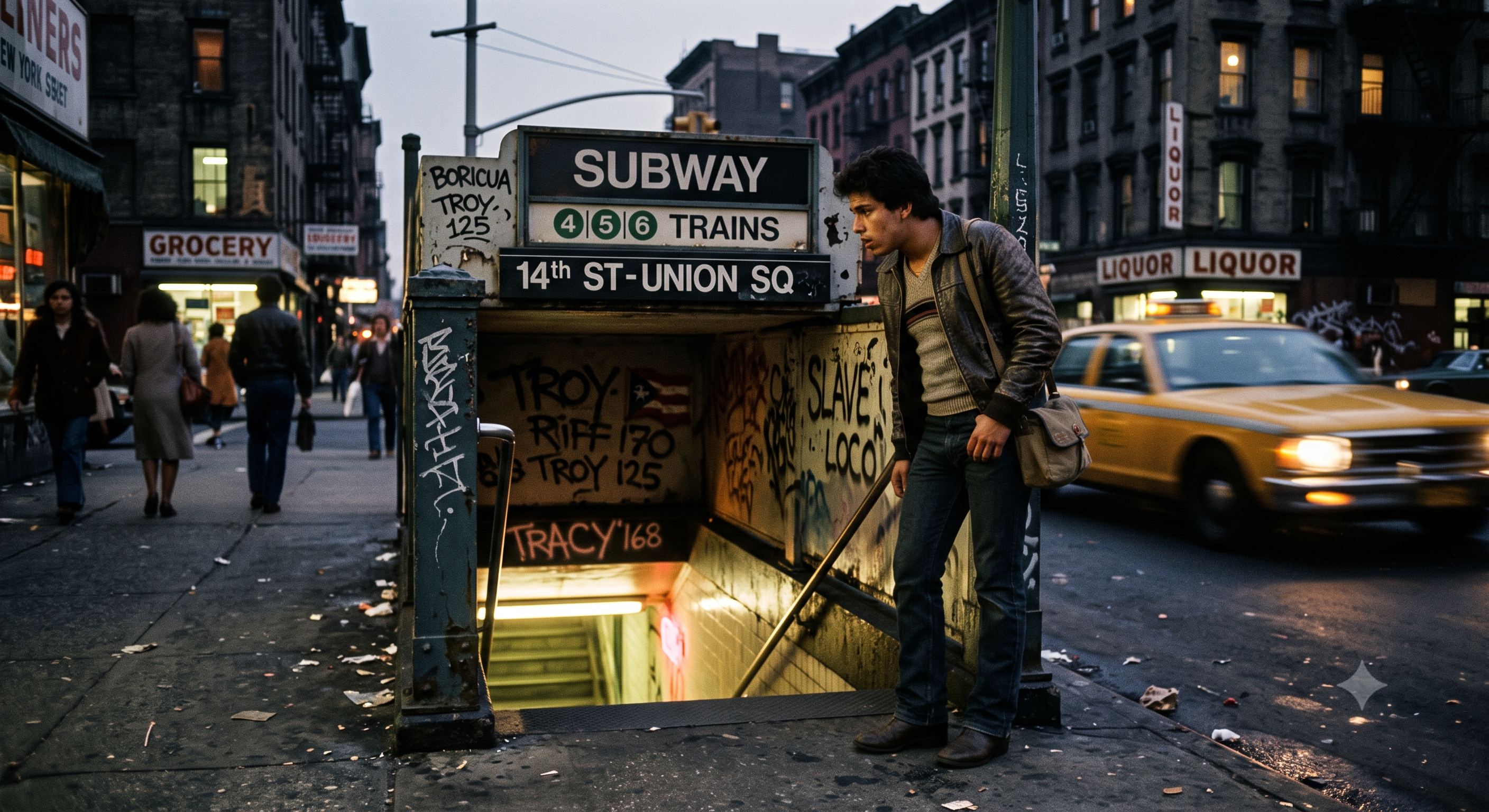
Dethroning the Ego: Rael’s Journey Through the Subterranean Mythos of Genesis
Genesis's 1974 double concept album, The Lamb Lies Down on Broadway, serves as a surrealist, urban reimagining of Joseph Campbell's Monomyth (The Hero's Journey). Written primarily by Peter Gabriel, the narrative follows Rael, a Puerto Rican street youth in New York City, who is violently pulled into a subterranean underworld. This investigation maps Rael's trajectory across Campbell's three structural pillars—Departure, Initiation, and Return—demonstrating how the album operates as an allegory for Jungian psychological individuation and the death of the ego.
Introduction: The Modern Mythmaker
The Lamb Lies Down on Broadway stands as one of progressive rock's most dense and enigmatic narrative achievements. While its superficial texture is gritty, urban, and surreal, its underlying architecture directly mirrors Joseph Campbell’s cross-cultural heroic blueprint laid out in The Hero with a Thousand Faces [1].
Rather than a classical knight or a mythological demigod, Gabriel positions Rael—a marginalized, aggressive graffiti artist—as the hero. This subversion updates the ancient quest for a modern, fragmented world, transforming external physical trials into deep psychological confrontations.
Act I: Departure (Separation)
The first movement of the album aligns with Campbell's "Departure" phase, where the hero is extracted from the mundane realities of the conscious world and cast into the unknown.
The Ordinary World: The Concrete Jungle
In the title track, "The Lamb Lies Down on Broadway," we are introduced to Rael's ordinary world. It is a cynical, consumerist, and hyper-masculine New York City. Rael protects himself from this hostile environment with a tough, performative exterior—his "hide." He uses an aerosol can to mark his territory, weaponizing his identity to survive.
The Call to Adventure & The First Threshold
The Call arrives without warning in "Fly on a Windshield" and "Broadway Melody of 1974." A dark, solid cloud materializes over Times Square and hardens into a giant, advancing wall of water or stone. Rael cannot flee; the wall absorbs him. This represents the sudden shattering of the conscious ego by the unconscious mind—the terrifying invitation to cross the first threshold.
The Belly of the Whale
In "In the Cage," Rael awakens completely separated from his known reality, pinned to a rock wall within a subterranean cage of stalactites and stalagmites.
Campbell defines the "Belly of the Whale" as the final shedding of the hero's worldly identity. By being swallowed into the unknown, the hero undergoes a symbolic death to prepare for rebirth [1:1].
Rael's panic in the cage, surrounded by spinning thoughts and a claustrophobic fear of death, marks his realization that his old street persona cannot protect him in this psychological underworld.
Act II: Initiation (The Underworld Descent)
The core of the album chronicles Campbell's "Initiation" phase. Here, the hero must endure a sequence of surreal, symbolic trials designed to strip away his false ego and force him to integrate his repressed shadow shelf.
[The Cage] ──> [Road of Trials] ──> [The Lamia] ──> [Slippermen Mutation]
(Ego Death)    (Conformity/Sex)     (The Goddess)    (Shadow Integration)
The Road of Trials
Rael's trials target his societal programming and biological drives:
-
"The Grand Parade of Lifeless Packaging": Rael witnesses a factory line of identical human bodies being prepped for consumer society. This is a trial of Individuation, forcing him to reject the safe, sterile conformity of the modern world.
-
"Back in N.Y.C.": A defensive flashback showing Rael's past gang violence and emotional numbness. This serves as a confrontation with his unintegrated shadow.
-
"Counting Out Time": A satirical look at Rael’s first, overly mechanical attempt at sexuality using an instructional manual. It exposes his inability to form genuine emotional and physical connections.
The Meeting with the Goddess and Woman as Temptress
In "The Carpet Crawlers" and "The Chamber of 32 Doors," Rael seeks a guide. He finds one in "Lilywhite Lilith," a blind creature who leads him through a subterranean maze into a chamber of pure light.
This sets up his encounter with "The Lamia." In this track, Rael encounters three mythological, snake-like maidens in a pool of perfume. When he enters the water, they feed on his flesh, and he, in turn, absorbs them as they die.
"The mystical marriage with the queen goddess of the world represents the hero's total mastery of life; for the woman is life, and the hero its knower." [1:2]
In the context of the album, this psycho-sexual encounter acts as the Meeting with the Goddess. By consuming and being consumed by the Lamia, Rael integrates his hidden anima (the feminine archetype of his psyche), moving past mere physical lust toward absolute spiritual vulnerability.
Atonement with the Father / Apotheosis
The most grotesque phase of Rael's initiation occurs during "The Colony of Slippermen." Rael discovers that by indulging his desires with the Lamia, he has mutated into a hideous, distorted monster (a Slipperman), joining a colony of others who suffered the same fate—including his estranged brother, John.
To heal himself, Rael must visit the "Supernatural Anaesthetist" and Dr. Dyper for a literal castration (the removal of his mutated reproductive organ, kept in a tube around his neck). When a raven steals the container and drops it into a rushing underground river ("Ravine"), Rael is forced to make a profound psychological choice.
Act III: Return and Apotheosis
The final act of the narrative presents Rael with the ultimate heroic dilemma: choosing between personal salvation or self-sacrificing compassion.
The Ultimate Choice: Refusal of the Return
In "The Light Dies Down on Broadway," Rael sees a portal opening above him. Through it, he can glimpse the familiar streets of Manhattan. His trials could be over; he has the chance to escape back to his ordinary world.
Suddenly, he hears cries for help. He looks down into the rapids of the river and sees his brother John being swept away by the current.
| Rael's Choices | Psychological Implication | Campbell's Stage |
|---|---|---|
| Enter the Portal | Retreat to old, defensive ego-state; failure of the quest. | Refusal of the Return |
| Dive into the Rapids | Sacrifice the self to save another; ego-dissolution. | The Magic Flight / Ultimate Boon |
Master of the Two Worlds
Rael rejects the portal and leaps into the dangerous waters ("In the Rapids"). He fights the current, drags John's unconscious body onto the riverbank, and breathes life back into him.
When he looks down at the brother he just saved, he experiences a startling, surreal revelation: John's face is actually his own face.
John was never a separate entity. He was a projection of Rael’s split consciousness—the cautious, timid ego-twin to Rael’s aggressive, defensive persona. By risking his life to save "John," Rael has successfully integrated his fractured self.
Freedom to Live: "it"
The album concludes with "it." With the illusion of dualism completely shattered, Rael's physical surroundings dissolve into cosmic energy. The music shifts to an ecstatic, high-tempo rock anthem.
The lyrics of "it" abandon linear narrative altogether, operating instead as a series of Zen-like paradoxes ("It is any real, it is any fake / It is everyday, it is an egg to break"). Rael has achieved Apotheosis and the Freedom to Live [2]. He is no longer trapped by his urban environment or his psychological trauma; he has transcended into the unified, non-dualistic self [3].
References
Joseph Campbell, The Hero with a Thousand Faces (Princeton: Princeton University Press, 1949). ↩︎ ↩︎ ↩︎
Kevin Holm-Hudson, Genesis's The Lamb Lies Down on Broadway (Burlington: Ashgate Publishing, 2008). ↩︎
Edward Macan, Rocking the Classics: English Progressive Rock and the Counterculture (Oxford: Oxford University Press, 1997). ↩︎