Find out more about Meher Baba and read about The Lamb by Genesis written by Peter Gabriel
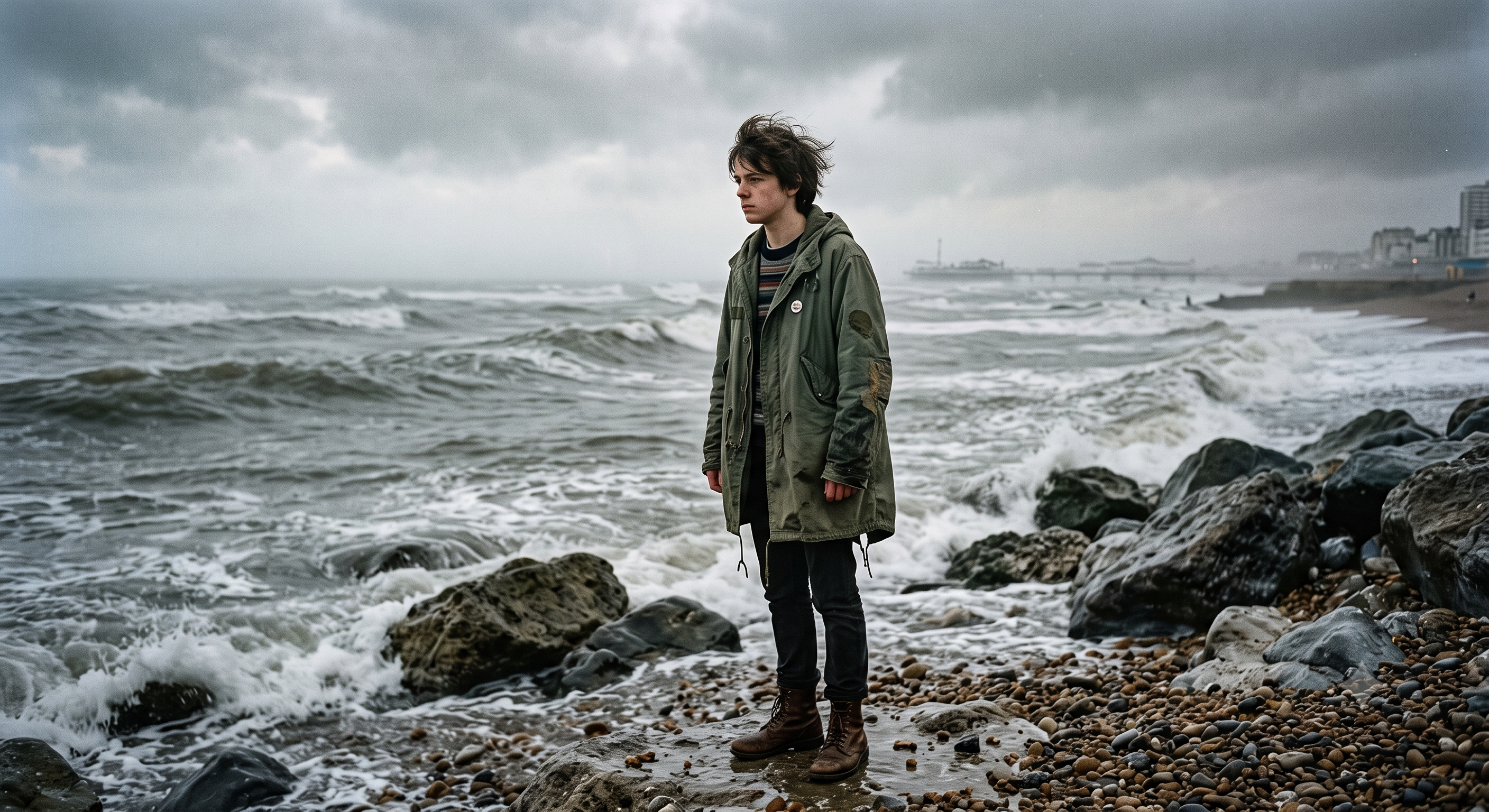
The Drop and the Ocean - The Spiritual Architecture of Quadrophenia
While The Who's 1973 rock opera Quadrophenia is widely celebrated as a gritty, sociological portrait of British Mod subculture and teenage disillusionment, its architect, Pete Townshend, fundamentally designed it as a spiritual allegory. Drawing deeply from the teachings of Indian spiritual master Meher Baba, the album uses the psychological fracture of its protagonist, Jimmy, and the omnipresent metaphor of the ocean to chart an existential journey from ego-fragmentation to divine surrender.
The Spiritual Architecture of Jimmy's Breakdown
On its surface, Quadrophenia follows Jimmy Cooper, a young London Mod struggling with a four-way split personality ("quadrophenia") amid the pills, parental fights, and gang riots of 1964. However, Townshend has explicitly stated that Jimmy's psychological unraveling is merely the catalyst for something much deeper: a journey that becomes "transmogrified, transformed... into a spiritual quest." [1]
While Tommy wore its mysticism on its sleeve (and its eyes, ears, and mouth), Quadrophenia hides its god in the foggy exhaustion of a Brighton beach, embedding its spiritual themes into the mundane and crushing realities of working-class youth [2]. Jimmy's search for "The Real Me" is a classic mystical crisis. He seeks validation through external structures, only for each to fail him:
-
The Psyche: A psychiatrist who fails to understand his condition.
-
The State/Family: Disillusioned parents who ultimately kick him out.
-
The Sacred: A hypocritical priest who offers hollow institutionalized religion.
-
The Subculture: The Mod scene, which he eventually discovers is a superficial consumerist illusion.
By systematically stripping Jimmy of these external anchors, Townshend forces his protagonist into a state of total existential alienation—the classic "Dark Night of the Soul."
The Quadrophenic Split as Ego Fragmentation
The four distinct personalities Jimmy possesses—the tough guy, the romantic, the bloody lunatic, and the beggar/hypocrite—are musically tied to the four members of The Who [3]. Spiritually, however, this split represents the fractured nature of the human ego operating under the influence of Maya (the cosmic illusion of separation).
Townshend's spiritual guide, Meher Baba, taught that the ego is not inherently an enemy to be instantly destroyed; rather, it is a necessary vehicle that drives the individual through the material world until it eventually collapses under its own weight [4]. In Quadrophenia, Jimmy's multi-faceted ego drives him to reckless rebellion until it completely shatters, clearing the path for an authentic confrontation with the infinite.
The Core Metaphor: The Drop and the Ocean
The defining spiritual motif of Quadrophenia is water. The album begins with the sound of crashing waves in "I Am the Sea" and culminates on a barren rock surrounded by the ocean. This imagery is lifted directly from Meher Baba’s primary philosophical metaphor: the relationship between the individual soul (the drop) and the Divine (the ocean) [5].
"God's love being the ocean and our 'selves' being the drops of water that make it up. Meher Baba said, 'I am the Ocean of Love.' I want to drown in that ocean, the 'drop' will then be an ocean itself." [3:1]
"Drowned": The Desire for Mystical Dissolution
The track "Drowned" serves as a pivotal spiritual turning point on the album. Originally written by Townshend as an explicit devotional ode to Meher Baba, the song takes on a dual meaning within Jimmy's narrative [3:2]. To a casual listener, Jimmy is contemplating suicide by throwing himself into the sea. Spiritually, however, the song expresses a profound yearning for fana—the Sufi term for the annihilation of the self in the divine.
When Jimmy sings about wanting to be "drowned" in the water, he is craving an end to the agonizing isolation of individuality. He is seeking to submerge his fractured ego into a unifying, transcendent oneness where the distinction between the self and the universe completely evaporates [2:1].
"Love, Reign O'er Me": The Ultimate Surrender
The climax of the opera takes place on a physical and spiritual precipice. Stranded on a rock off the coast of Brighton during a torrential downpour, Jimmy reaches absolute zero. He has destroyed his scooter, lost his friends, been rejected by his dream girl, and is coming down from a massive dose of amphetamines [6].
Jimmy expects a benign, mystical voice to call out from the sea to save him. Instead, he simply gets soaked by freezing rain [6:1]. Townshend notes that this subverts the "escape clause" version of spirituality. Finding a spiritual path does not magically erase human trouble; it brings those problems to an acute head so they can finally be confronted and processed [4:1].
Baptism and the "Fantastic Emptiness"
In the final anthem, "Love, Reign O'er Me," the freezing rain transitions from a hostile natural element into a literal divine baptism. Townshend drew directly from Meher Baba's teachings that rain represents a physical manifestation of God's blessing, and thunder represents the divine voice [7].
The screaming plea for "Love" is not a romantic pining, but a desperate invocation of the absolute, unconditional love of the Creator. Jimmy does not emerge from this experience as a saint, a guru, or even a cured man. Instead, by choosing not to end his life and instead surrendering his ego to the raging storm, he is left in a state of what Townshend calls "a fantastic emptiness... a need to be filled." [4:2] The opera ends not with a neat narrative resolution, but with an open spiritual void, ready to receive true consciousness.
**
References
Pete Townshend, "Celebrating 45 years of Quadrophenia!", PeteTownshend.net ↩︎
Robert McParland, "To the Sea and Sand: Quadrophenia—An Interpretation", ResearchGate ↩︎ ↩︎
Wikipedia Contributors, "Drowned (song)", Wikipedia ↩︎ ↩︎ ↩︎
Pete Townshend, "Pete Townshend – Penthouse Magazine Interview", The Uncool / Cameron Crowe Journalism ↩︎ ↩︎ ↩︎
Pete Townshend, "Meher Baba - Pete Townshend", PeteTownshend.net ↩︎
Joe Bonomo, "Is it Me?, or Withering Sadness... Spiritual Desperation by Joe Bonomo", The Normal School ↩︎ ↩︎