View Business English Lesson on StudyESL.ca
Why Canada Will Never Have a WeChat
While WeChat revolutionized the digital economy in China by seamlessly bundling social networking, e-commerce, food delivery, and financial services, replicating this "Super App" model in Canada is fundamentally unviable. The Canadian digital landscape is defined by mature institutional banking monopolies, an entrenched national payment rail (Interac), stringent data privacy frameworks (PIPEDA/Bill C-27), and deep-seated socio-cultural preferences for decentralized, specialized applications. Instead of consolidating into a singular frontend mega-app, Canada's ecosystem is shifting toward "embedded finance"—integrating invisible transactional layers into distinct, best-in-class niche platforms.
1. The Financial Moat: Interac and Bank Hegemony
The foundational engine of any super app is its underlying payment system. WeChat Pay and Alipay succeeded in China because they capitalized on a unique historical window: a massive unbanked or underbanked population that "leapfrogged" the traditional credit/debit card phase, moving directly from cash to mobile QR-code transactions [1][2].
In stark contrast, Canada boasts a highly mature, heavily consolidated, and deeply trusted banking infrastructure dominated by the "Big Six" financial institutions [3][2:1].
-
The Interac Monopoly: Canada features a state-sanctioned, ultra-efficient interbank network called Interac. Interac powers the majority of everyday transactions through Interac Debit and Interac e-Transfer [4].
-
Infrastructural Scale: Interac e-Transfer processes roughly 1.6 billion transactions annually—representing over $620 billion in total transaction value [4:1]. Interac Debit remains the undisputed backbone of in-person retail, facilitating nearly 7 billion transactions a year [4:2].
-
Low Interchange Friction: Because Interac operates on a low, flat-fee merchant model rather than the percentage-based interchange fees typical of credit card networks, Canadian merchants have zero economic incentive to abandon this infrastructure in favor of a proprietary, app-based closed-loop wallet [4:3].
-
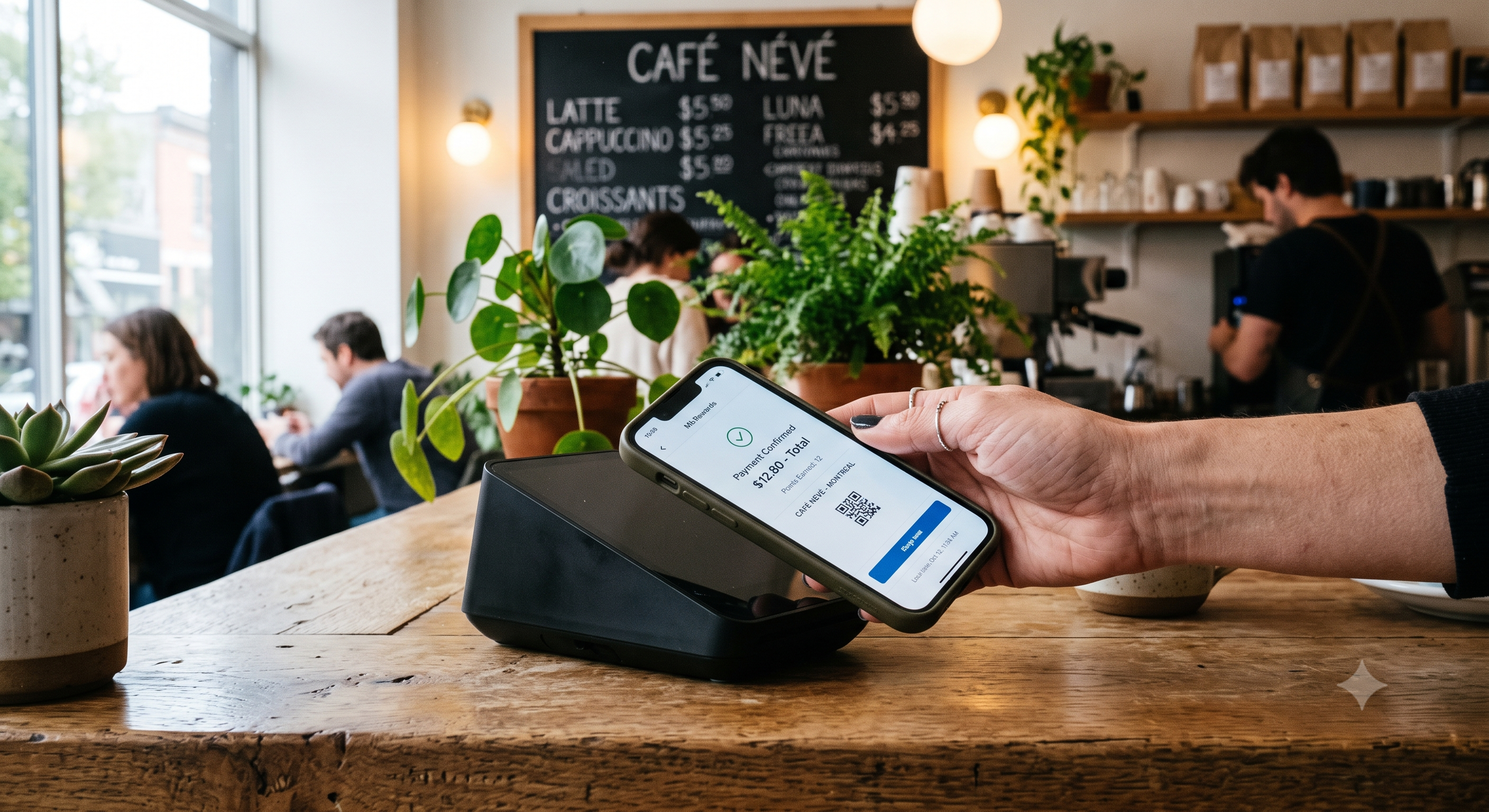
Hardware-Level Duopoly: Smartphone-based payments in Canada are already locked down by Apple Pay and Google Pay [1:1]. These platforms control the device-level Near Field Communication (NFC) hardware, making it incredibly difficult for a third-party software application to offer a smoother "tap-to-pay" experience [4:4][1:2].
2. Regulatory Iron Curtains: PIPEDA and Anti-Trust Guardrails
A true super app relies on cross-vertical data monetization. To create value, the platform must track a user across multiple disconnected contexts—aggregating their chat logs, medical appointments, geolocation data, ride-hailing history, and financial transactions into a single holistic consumer profile [5].
Canadian regulatory architecture is deliberately constructed to prevent this type of structural data consolidation [2:2].
Data Minimization and Explicit Consent
Under the federal Personal Information Protection and Electronic Documents Act (PIPEDA) and its modernized legislative counterparts (such as Bill C-27 / Consumer Privacy Protection Act), Canadian apps must strictly enforce data minimization [6][7].
Under Canadian law, organizations cannot legally bundle data collection purposes. An app cannot condition the use of a messaging service on the user consenting to have their location tracked for ride-hailing or their spending data mined for targeted credit products [6:1][7:1]. Every single vertical within an app requires granular, explicit, and un-bundled user consent [6:2][7:2].
Anti-Trust Surveillance
The Competition Bureau Canada, working alongside the Office of the Privacy Commissioner (OPC) via the Canadian Digital Regulators Forum, actively audits digital ecosystems for "deceptive digital design" or "dark patterns" [8]. The Canadian government explicitly treats consumer privacy as a core dimension of market competition [8:1].
Any single domestic application attempting to capture a multi-market vertical (e.g., combining telecommunications with retail banking and logistics) would trigger immediate antitrust intervention, as policymakers are explicitly warned by international bodies like the OECD about the dangers of ecosystem "gatekeepers" [5:1].
3. Socio-Cultural Barriers: Trust Deficits and UX Cleavage
The Western consumer psychology differs fundamentally from the environment that birthed WeChat, creating massive adoption friction for any developer attempting a bloatware strategy [3:1][4:5].
The "Feature Bloat" Aversion
Western and Canadian users express a distinct cultural preference for clean, minimalistic, and task-specific user interfaces [3:2][4:6]. There is an active resistance to "cluttered" multi-use interfaces [3:3][4:7]. Canadian digital consumers prefer a fragmented ecosystem of specialized, "best-of-breed" applications (e.g., using Shopify for commerce, Slack or WhatsApp for communication, and a dedicated banking app for finance) because these apps excel at their core functions [3:4].
The Trust Gap
WeChat’s viability depends on near-absolute consumer trust in a single ecosystem [1:3]. However, Western consumer sentiments toward monolithic tech corporations are highly volatile and characterized by surveillance skepticism [1:4][5:2].
-
According to data from consumer benchmark surveys, while roughly 58% of online adults in metro China trust the content and ecosystems managed by brands on social networks, only 20% of North American consumers share that same level of trust [1:5].
-
Furthermore, Western consumers fear the "single point of failure" risk [5:3]. In a super app ecosystem, if a user's account is flagged, banned, or compromised by a security breach, they instantly lose access to their social circle, their digital identification, their transit access, and their capital [5:4]. Canadians actively mitigate this risk by distributing their digital footprint across competing platforms [4:8].
4. Demographic Realities and Post-Acquisition Unraveling
Building a super app requires astronomical upfront capital expenditures to build out logistics, customer acquisition channels, and multi-industry compliance structures [5:5][9].
┌────────────────────────────────────────────────────────┐
│               DEMOGRAPHIC SCALABILITY GAP              │
├────────────────────────────┬───────────────────────────┤
│ China Market Scale         │ Canada Market Scale       │
│ ~1,400,000,000 Users       │ ~41,000,000 Users         │
├────────────────────────────┴───────────────────────────┤
│ Micro-margins scale into   │ High Customer Acquisition │
│ massive R&D capital.       │ Cost (CAC) breaks ROI.    │
└────────────────────────────────────────────────────────┘
China’s population of over 1.4 billion allowed WeChat to monetize microscopic, fractions-of-a-cent margins per transaction and scale them into multi-billion dollar R&D budgets. Canada's total population sits at roughly 41 million. When accounting for highly fragmented regional demographics and the necessity of deploying bilingual services across English and French markets, the addressable Customer Lifetime Value (LTV) simply cannot justify the astronomical Customer Acquisition Cost (CAC) [3:5][9:1].
Tech companies in North America that previously harbored super app ambitions (such as PayPal, Klarna, or Affirm attempting to purchase and stitch together fintech, travel, and logistics businesses) have spent the mid-2020s aggressively spinning off or shutting down those auxiliary acquisitions [5:6][9:2]. High operational complexity and tightening capital markets have forced firms to retreat back to their core competencies, effectively closing the historical window for super app expansion [1:6][9:3].
5. The Canadian Alternative: Invisible Embedded Finance
Because the front-end super app model is structurally blocked by Canadian banking habits and privacy laws, the domestic market is instead evolving toward an entirely different architecture: Embedded Finance via Open Banking APIs [4:9][2:3].
Rather than a single app pulling every aspect of a consumer's life into its private walls, Canada's ecosystem relies on secure, government-regulated financial APIs [4:10]. These allow small businesses, e-commerce stores, and transit apps to plug banking and payment capabilities directly into their existing specialized user interfaces [4:11][2:4].
The consumer journey remains decentralized across separate apps, but the transactional backend becomes unified and invisible [1:7][2:5]. A user will continue to buy groceries via a grocery app, chat via an encrypted messenger, and hail a ride via a transit app—but all of them will share a secure, frictionless backend rail without any single tech giant owning the consumer’s total digital existence [1:8][2:6].
References
Forrester - The Super App Window Has Closed ↩︎ ↩︎ ↩︎ ↩︎ ↩︎ ↩︎ ↩︎ ↩︎ ↩︎
Airwallex - Canada may never have a super app, but with embedded finance you can get close ↩︎ ↩︎ ↩︎ ↩︎ ↩︎ ↩︎ ↩︎
Monsoonfish - 3 Reasons Why Super Apps Failed to Dominate Globally ↩︎ ↩︎ ↩︎ ↩︎ ↩︎ ↩︎
J.P. Morgan - What's the Future for Western Super-Apps? ↩︎ ↩︎ ↩︎ ↩︎ ↩︎ ↩︎ ↩︎ ↩︎ ↩︎ ↩︎ ↩︎ ↩︎
DEV Community / FoxData - Super Apps Under Scrutiny: Regulatory and Risk Challenges ↩︎ ↩︎ ↩︎ ↩︎ ↩︎ ↩︎ ↩︎
Capgo - PIPEDA Compliance for Mobile Apps in Canada ↩︎ ↩︎ ↩︎
App-Scoop - App Compliance in Canada: PIPEDA, Data Privacy & Legal Requirements ↩︎ ↩︎ ↩︎
Competition Bureau Canada - Digital Design to Support Informed Consumer Choices ↩︎ ↩︎
Modern Retail - Why super apps have yet to take off in the U.S. ↩︎ ↩︎ ↩︎ ↩︎