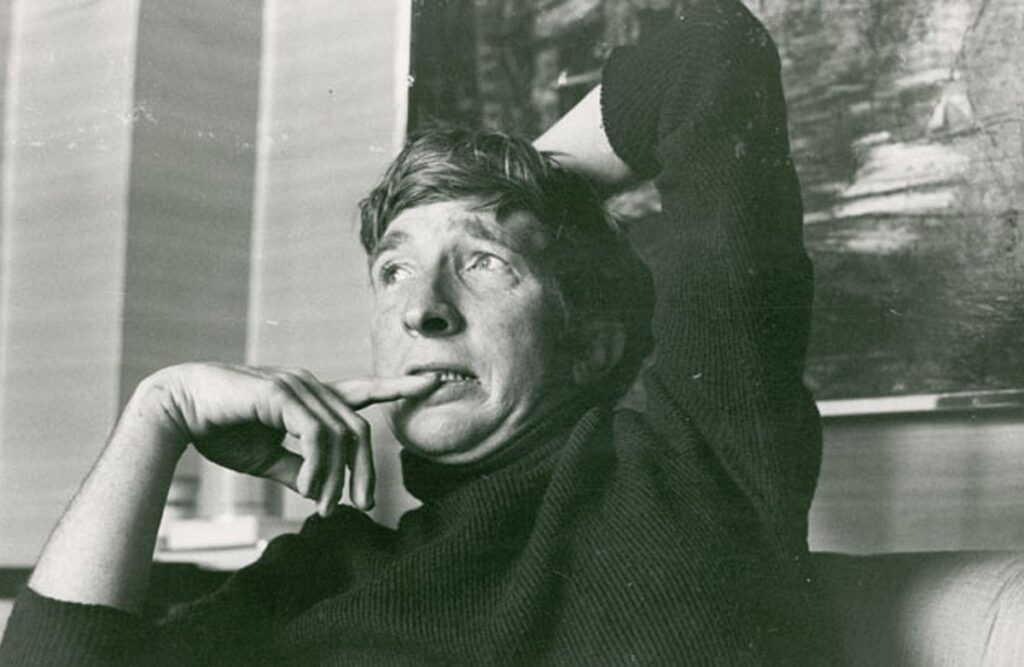
John Updike's Main Literary Themes
John Updike (1932–2009) stands as one of late 20th-century American literature's most prolific and lyrical chroniclers of middle-class life. His work routinely explores the dialectic between human desire and moral order, weaving together Protestant theology, suburban domesticity, sexual liberation, and the existential anxiety of mortality.
1. Domestic Realism and Suburban Middle-Class Life
Updike's most enduring literary canvas is the small-town, middle-class suburban ecosystem of mid-to-late 20th-century America—frequently modeled after his native eastern Pennsylvania (fictionalized as Olinger or Brewer) and coastal New England (Tarbox).[1] Updike examined the post-WWII American dream not through grand socio-political manifestos, but through the granular, daily existence of ordinary WASPs: salespeople, suburban spouses, hardware store owners, and high school athletes.[2]
-
The Claustrophobia of Conformity: Characters often feel trapped by domestic routine, community expectations, and economic obligations, while simultaneously dreading the collapse of these stabilizing structures.[1:1]
-
"Giving the Mundane its Beautiful Due": Updike famously declared his artistic goal was to give ordinary life its due, elevating supermarket aisles, suburban backyards, and domestic squabbles through rich, sensory prose.[1:2]
Updike's famous four-novel series—Rabbit, Run (1960), Rabbit Redux (1971), Rabbit Is Rich (1981), and Rabbit at Rest (1990)—follows former high school basketball star Harry "Rabbit" Angstrom across four decades, serving as a premier chronicle of post-war American middle-class social shifts.[2:1]
2. Protestant Existentialism and Theology
Theology is the intellectual and spiritual engine behind Updike's fiction.[3] Raised in the Lutheran tradition, Updike was deeply influenced by the religious existentialism of Søren Kierkegaard and the neo-orthodox theology of Karl Barth.[2:2] His works routinely depict the modern crisis of faith in a secularizing society.
Core Theological Strands
-
Antinomian Grace: Updike embraced a concept of Christianity where divine grace operates independently of moral law.[3:1] He argued that God already knows human frailty and cannot be shocked by human sin or sexual transgression.[3:2]
-
Religion as a Defense Against Nothingness: For Updike’s protagonists, religious instinct is less about following dogma and more about shielding the soul from existential dread and the terror of non-being.[3:3]
-
Secular Rationalism vs. Sacred Mystery: Updike repeatedly presents godless humanism or cold scientific rationalism as spiritually dry, rigid, or entropic.[2:3]
3. Sex, Adultery, and Eros as Sacred Escape
Often described as the "poet laureate of modern adultery," Updike treated sexual desire and extramarital romance as central arenas of spiritual exploration.[3:4] For Updike’s characters, sex is rarely just physical gratification; it is a sacred sanctuary and an attempt to experience transcendence in a disenchanted world.[3:5]
-
The "Post-Pill Paradise": In novels like Couples (1968), Updike mapped the shifting sexual ethics of 1960s suburbia, where spouse-swapping and infidelity served as a modern pseudo-religion replacing traditional churchgoing.[4]
-
Eros vs. Thanatos: Sexual passion acts as an antidote to the fear of aging and death.[2:4] Entering an affair is depicted as a desperate attempt to reclaim youth, vitality, and infinite possibility.[2:5]
-
Domestic Aftermath: While depicting erotic connection with lyrical intimacy, Updike never ignores its destructive aftermath—broken families, wounded spouses, and lingering guilt.[1:3]
4. Mortality, Time, and National Entropy
A pervasive theme throughout Updike’s canon is the inevitability of physical decay, aging, and death.[2:6] This personal obsession with mortality often mirrors a broader critique of American cultural and economic decline.[2:7]
| Theme Dimension | Microcosm (Individual) | Macrocosm (Society & Nation) |
|---|---|---|
| Physicality | Bodily decline, heart failure, loss of athletic vitality | Industrial decay, suburban sprawl, environmental blight |
| Spiritual State | Nostalgia for youth, midlife crises, fear of non-existence | Collapse of traditional religious and civic institutions |
| Key Example | Harry Angstrom's failing heart in Rabbit at Rest | Economic stagflation and energy crises of 1970s America |
"Actuality is a running impoverishment of possibility."
— John Updike, The Bulgarian Poetess (1966)[2:8]
5. Primary Character Archetypes
-
The Restless Nomad (e.g., Harry "Rabbit" Angstrom): Instinctive and impulse-driven, running from domestic duty in search of an elusive spiritual grace.
-
The Troubled Clergyman / Intellectual (e.g., Rev. Thomas Marshfield, Roger Lambert): Skeptical thinkers wrestling with the collision between modern science, secularism, and theology.
-
The Suburban Seeker (e.g., Piet Hanema): Middle-class suburbanites attempting to cure existential isolation through sexual conquest and social rituals.
Resonant Notes
🔗 Strong Resonance
-
Don DeLillo Major Themes Analysis — DeLillo's White Noise shares Updike's obsession with mortality and the commodification of existential dread. Where Updike's characters seek transcendence through sex and religion, DeLillo's Jack Gladney shops for "existential credit" and fears the white noise of dying. Both chronicle the American middle-class attempt to buffer against death-anxiety through consumerism and distraction.
-
The Existential Paradox of Annie Hall's Opening Monologue — Alvy Singer's neurotic self-analysis and fear of mortality mirror Updike's Rabbit Angstrom — both are men trapped by their own consciousness, unable to accept love or happiness, processing existential dread through compulsive behavior. The Groucho Marx paradox ("I don't want to belong to any club that would have me as a member") is Rabbit's spiritual condition.
-
Travis Bickle - Identity Fragmentation and The Savior Complex — Travis Bickle's urban alienation and savior complex echo Updike's suburban seekers — men who project their existential emptiness onto external targets (sex, violence, salvation) rather than confronting the void within. Both figures embody the crisis of masculine identity in post-WWII America.
-
The Philosophical Worldview of Fyodor Dostoevsky — Dostoevsky's underground man — alienated, hyper-conscious, reactive — is the literary prototype for Updike's restless protagonists. Ivan Karamazov's rebellion against God's harmony ("returning the ticket") resonates with Updike's antinomian Christianity: a faith that wrestles with suffering rather than offering easy consolation.
🏗️ Structural & Thematic Resonance
-
Henry James - Psychological Realism and the William James Dynamic — Henry James's "central consciousness" technique and his "House of Fiction" metaphor directly anticipate Updike's method of filtering suburban reality through a single character's subjective perception. Both writers elevate the granular, internal experience of ordinary life to the level of high art.
-
Jack Kerouac — Kerouac's Beat spontaneity and Updike's polished lyricism are stylistic opposites, yet both are chroniclers of the American quest for transcendence. Kerouac sought "IT" on the open road; Updike's Rabbit sought it in the bedroom and the church. Both captured the spiritual restlessness of post-war America.
-
Romantic Literature Themes Analysis — Updike's treatment of eros as sacred escape and his fascination with the "Blue Flower" of unattainable transcendence (Sehnsucht) are direct descendants of German Romanticism. His suburban protagonists are Romantic seekers trapped in a disenchanted, post-Romantic world.
-
American Transcendentalism — Updike's Protestant existentialism offers a dark mirror to Emersonian self-reliance. Where Transcendentalists saw the Over-soul in nature, Updike's characters find only the silence of God. His work represents the 20th-century collapse of Transcendentalist optimism into existential anxiety.
🌿 Peripheral Resonance
-
Northrop Frye's Fearful Symmetry - A Study of William Blake — Blake's Law of Contraries — that progression requires dynamic tension between opposing forces — illuminates Updike's dialectic between desire and moral order, eros and thanatos, sacred and profane. Updike's fiction embodies Blake's principle that "without contraries is no progression."
-
Transdisciplinary Analysis of Epistemological Illusion, Cognitive Defense, and Neural Architecture — The note's exploration of Terror Management Theory (TMT) — the construction of cultural worldviews as buffers against mortality salience — provides a psychological framework for understanding Updike's characters. Rabbit's running, Piet's affairs, and Marshfield's theological wrestling are all TMT strategies: bids for symbolic immortality against the terror of non-being.
-
The Matter With Things Analysis — McGilchrist's diagnosis of left-hemisphere dominance — the reduction of lived experience to abstract, utilitarian categories — parallels Updike's critique of secular rationalism as spiritually entropic. Both thinkers argue that something essential is lost when the world is reduced to what can be measured and controlled.
Backlinks
- Norman Mailer — Both Mailer and Updike chronicle the crisis of American masculinity in post-WWII America. Where Mailer's men seek authenticity through violence, rebellion, and the rejection of the "Square," Updike's Rabbit Angstrom seeks it through sex, domestic flight, and spiritual restlessness. Both are obsessed with mortality, dread, and the spiritual emptiness lurking beneath suburban conformity.
Backlinks
- Woody Allen — Updike's Rabbit Angstrom and Allen's Alvy Singer are spiritual twins: men trapped by their own consciousness, unable to accept love or happiness, processing existential dread through compulsive behavior. The Groucho Marx paradox ("I don't want to belong to any club that would have me as a member") is Rabbit's condition as much as Alvy's. Both chronicle the American middle-class attempt to buffer against death-anxiety through distraction.
References
Literary Theory and Criticism / Analysis of John Updike's Stories / literariness.org ↩︎ ↩︎ ↩︎ ↩︎
Literary Theory and Criticism / Analysis of John Updike's Novels / literariness.org ↩︎ ↩︎ ↩︎ ↩︎ ↩︎ ↩︎ ↩︎ ↩︎ ↩︎
Public Discourse / A Rather Antinomian Christianity: John Updike's Religion / thepublicdiscourse.com ↩︎ ↩︎ ↩︎ ↩︎ ↩︎ ↩︎
EBSCO Research Starters / Couples by John Updike Summary and Analysis / ebsco.com ↩︎