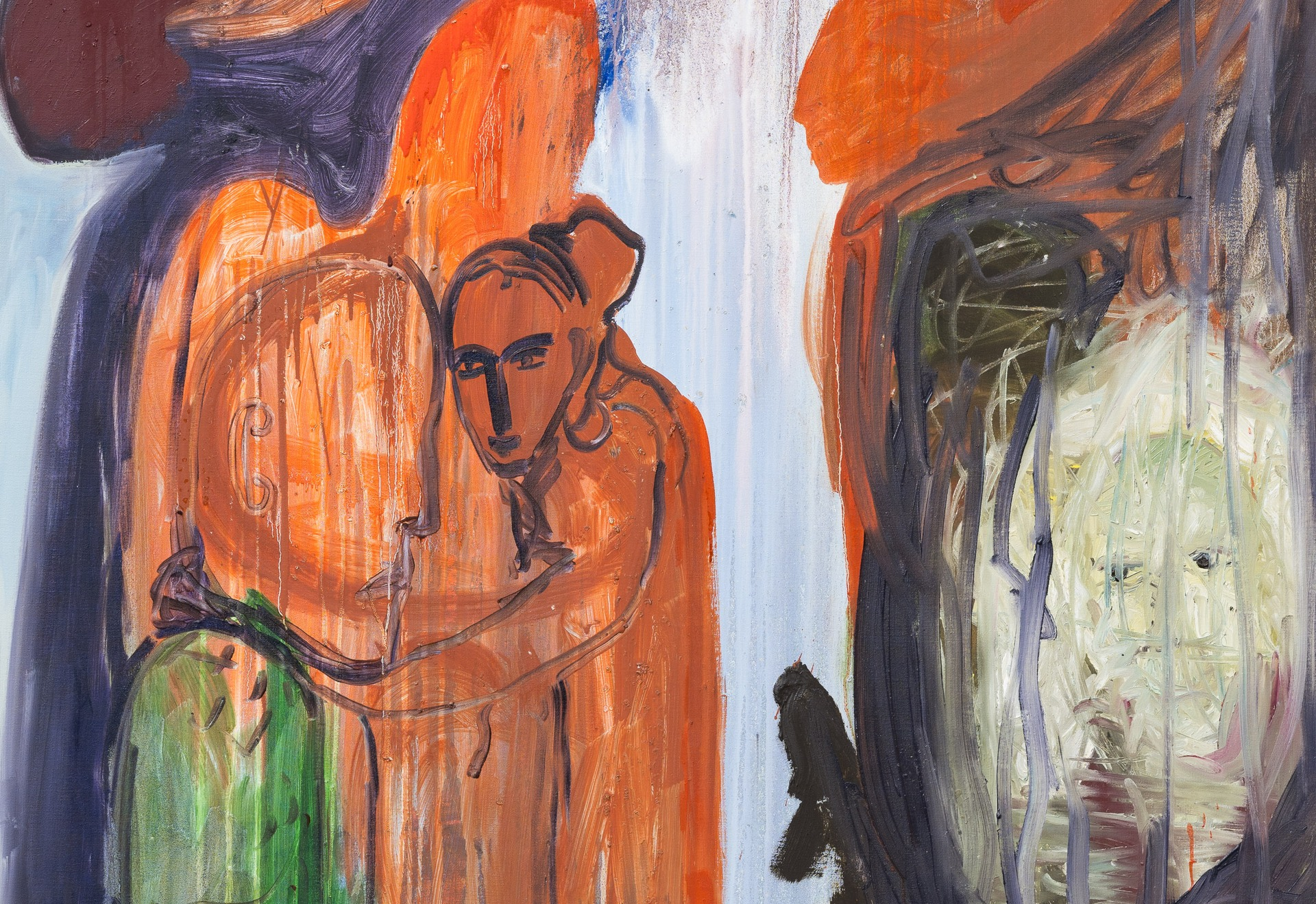
Jean-Paul Sartre
Jean-Paul Sartre (1905–1980) was a French philosopher, novelist, playwright, and political theorist who stands as the principal figure of 20th-century secular existentialism.[1] His philosophy asserts that human existence lacks pre-determined purpose or divine design, placing absolute freedom—and the heavy burden of responsibility—on every individual to forge their own meaning through action.[2]
Core Philosophical Principles
1. Existence Precedes Essence (L'existence précède l'essence)
In classical philosophy and theological tradition, manufactured objects and living things are conceived with a pre-existing purpose or nature—their "essence" precedes their "existence." For example, a paperknife is designed by a craftsman with a specific function in mind before it is physically manufactured.[2:1]
Sartre inverted this relationship for human beings:
- Human Existence First: Humans exist, encounter themselves in the world, and only through subsequent choices and actions define who and what they are.[2:2]
- Absence of a Blueprint: Rejecting the existence of a creator God, Sartre argued that there is no fixed human nature, intrinsic moral code, or pre-assigned destiny.[3]
- Self-Creation: An individual's identity is not defined by innate traits or past events, but by their ongoing projects and choices.[1:1]
2. Radical Freedom and Absolute Responsibility
For Sartre, freedom is not a political privilege or a sporadic gift; it is the inescapable structural condition of human consciousness.[3:1]
"Man is condemned to be free; because once thrown into the world, he is responsible for everything he does." — Jean-Paul Sartre, Existentialism is a Humanism [2:3]
- Condemned to Freedom: Humans did not choose to exist, yet once in the world, they bear total accountability for every decision they make.[2:4]
- Facticity vs. Freedom: Sartre acknowledged facticity—the unchosen facts of one's existence, such as height, place of birth, or historical era.[3:2] However, an individual always retains complete freedom in how they interpret, give meaning to, and act upon their facticity.[1:2]
- Universal Impact of Choice: In choosing how to live, Sartre argued that an individual projects an ideal of human existence, effectively deciding what humanity ought to be.[2:5]
3. Phenomenological Ontology: In-Itself vs. For-Itself
In his treatise Being and Nothingness (1943), Sartre partitioned reality into two fundamental modes of being:[3:3]
| Mode of Being | French Term | Description | Examples |
|---|---|---|---|
| Being-in-itself | Être-en-soi | Non-conscious, inanimate reality. Solid, complete, fully self-identical, and devoid of freedom or movement. | Rocks, tables, physical matter |
| Being-for-itself | Être-pour-soi | Conscious reality. Defined by self-awareness, intentionality, change, and the capacity to project into the future. | Human consciousness |
Because human consciousness (for-itself) is not a fixed physical object, Sartre defined it as a "nothingness"—a continuous void that constantly transcends its current state.[1:3]
Psychological and Intersubjective Dynamics
4. Bad Faith (Mauvaise Foi)
Bad faith is Sartre's concept for self-deception, in which an individual lies to themselves to evade the anxiety of radical freedom and personal accountability.[3:4]
Bad faith occurs whenever a person treats themselves as an inanimate object devoid of choice (in-itself), or conversely, ignores physical reality (facticity) to escape responsibility.[1:4]
Sartre highlighted two primary forms of bad faith:
- Denying Freedom (Role-Playing): Hiding behind a social role, profession, or psychological label. Sartre famously described a café waiter whose movements are overly exaggerated and mechanical—he is acting out the role of a waiter to convince himself that his position dictates his behavior, denying his freedom to quit or act differently.[3:5]
- Denying Facticity (Delusional Potential): Pretending one is completely unconstrained by physical or historical realities, dwelling in imaginary potential without ever translating choices into action.[1:5]
5. Anguish (L'Angoisse)
Sartre made a sharp distinction between fear and anguish:
- Fear is an emotional response directed toward an external physical threat (e.g., fear of falling from a precipice).
- Anguish is the internal dread experienced upon realizing one's own absolute freedom (e.g., realizing that nothing physically forces a person to stay safe on the path except their own choice, and that they could theoretically jump).[3:6]
Anguish arises from recognizing that there are no external guarantees, divine signposts, or objective moral frameworks to validate our choices.[2:6]
6. The Other and "The Look" (Le Regard)
Sartre explored intersubjectivity by analyzing what happens when another conscious human enters one's field of perception through The Look (Le Regard):[1:6]
- Loss of Subjectivity: Being observed by another person turns an individual from a conscious subject into an object in the Other's world.[3:7]
- Being-for-Others (Être-pour-autrui): This third mode of being represents the identity an individual possesses as an object of perception for someone else.[1:7]
- "Hell is Other People": In his play No Exit (1944), Sartre coined this famous line (L'enfer, c'est les autres). It does not mean human company is intrinsically malicious; rather, it emphasizes the anguish of having one's identity judged, categorized, and frozen by the gaze of another without having direct control over their perception.[4]
Political Engagement and Later Synthesis
7. Committed Literature (Littérature Engagée)
Following the trauma of World War II, Sartre argued that artists, writers, and intellectuals cannot remain passive observers of society.[4:1]
- Active Engagement: Literature must serve as an active tool for social critique and human liberation.[4:2]
- Implicit Choice: Sartre maintained that staying silent or politically neutral during times of oppression is itself a deliberate political choice.[2:7]
8. Synthesis with Marxism
In his later major work, Critique of Dialectical Reason (1960), Sartre sought to synthesize existentialism with Marxist theory.[1:8]
- Existential Marxism: He viewed Marxism as the essential philosophy of the modern era, providing necessary structural insights into economic and social history.[3:8]
- Restoring Human Agency: Sartre criticized rigid, deterministic Soviet Marxism for treating human beings as mere products of historical forces. He argued that existentialism was needed to restore human agency, demonstrating how individuals act within historical conditions.[1:9]
Major Works
- Nausea (La Nausée, 1938): A philosophical novel depicting an individual confronting the absurd, contingent nature of physical reality.[4:3]
- Being and Nothingness (L'Être et le Néant, 1943): Sartre's theoretical treatise detailing his ontology of freedom, consciousness, and bad faith.[3:9]
- No Exit (Huis Clos, 1944): A drama exploring intersubjective tension and objectification among three damned souls.[4:4]
- Existentialism is a Humanism (L'existentialisme est un humanisme, 1946): A public lecture defending existential philosophy against critics.[2:8]
- Critique of Dialectical Reason (Critique de la raison dialectique, 1960): An effort to harmonize existential human freedom with Marxist historical materialism.[1:10]
Resonant Notes
🔴 Strong Resonance
- Continental Philosophy — Directly covers Sartre's existentialism, including "existence precedes essence," alongside Kierkegaard, de Beauvoir, and Camus. Sartre is a central figure in this tradition.
- Søren Kierkegaard — Kierkegaard's concepts of anxiety (angst), the leap of faith, and subjective truth are direct precursors to Sartre's existentialism. Both grapple with radical freedom and the burden of choice in the absence of external guarantees.
- Viktor Frankl — Frankl's Logotherapy (freedom of will, will to meaning) directly engages with the same existential questions Sartre raised. Frankl's "between stimulus and response there is a space" echoes Sartre's radical freedom, though Frankl offers meaning as the answer where Sartre offers self-creation.
- Franz Kafka — Kafka's "Kafkaesque" condition — where individuals use reason to navigate irrational systems, only to accelerate their own subjugation — is a literary embodiment of Sartre's bad faith and the anguish of navigating a world without objective meaning.
🟡 Structural & Theoretical Resonance
- Theory of the Subject - Jacques Lacan — Lacan's Mirror Stage (the infant mistaking an external image for their true self) parallels Sartre's "The Look" (Le Regard) — both explore how identity is constituted through the gaze of the Other. Lacan's Real (that which resists symbolization) resonates with Sartre's being-in-itself.
- Carl Gustav Jung (1875–1961) — Jung's concept of the Persona (the social mask) directly parallels Sartre's analysis of bad faith through role-playing — the café waiter who hides behind his social role to deny his freedom.
- Dissolving vs. Evolving-The Self in Buddhism and Jung — The Persona as a social mask that can become a prison of inauthenticity resonates deeply with Sartre's critique of self-deception and role-identification.
- Losing Ourselves - Learning to Live without a Self - by Jay L. Garfield — Garfield's argument that the self is a conventional designation, not a real entity, provides a Buddhist counterpoint to Sartre's existential self-creation. Both agree there is no fixed essence, but Sartre insists on radical self-making where Buddhism advocates letting go of the self entirely.
🟢 Peripheral & Thematic Resonance
- Travis Bickle - Identity Fragmentation and The Savior Complex — Travis Bickle's construction of the "righteous avenger" persona is a vivid literary case study of Sartrean bad faith — hiding from authentic freedom behind a mythologized role.
- Cognitive Dissonance — The psychological machinery of identity-protective cognition parallels Sartre's bad faith: both describe how the mind distorts reality to protect a constructed sense of self from threatening information.
- Defining a Simulacrum — Baudrillard's simulacra and Sartre's bad faith share a structural kinship: both describe how copies, roles, and social fictions replace authentic reality. The "copy that replaces the original" is the social mask that replaces the free, choosing subject.
- Henry James - Psychological Realism and the William James Dynamic — James's "interiorization of action" — shifting drama from external events to subtle shifts in consciousness — is the literary technique that Sartre himself employed in Nausea and No Exit.
Backlinks
-
Friedrich Nietzsche (1844–1900) — Sartre's existentialism is a direct secular heir to Nietzsche's philosophy. Sartre's "existence precedes essence" echoes Nietzsche's rejection of fixed human nature and transcendent moral foundations. Both thinkers grapple with the death of God and the burden of radical freedom — where Nietzsche offers the Übermensch as a response to nihilism, Sartre offers radical self-creation through authentic choice.
-
Norman Mailer — Mailer's "American Existentialism" is a direct literary adaptation of Sartrean existentialism. Both reject fixed human nature, emphasize radical choice, and explore bad faith. Mailer's Hipster is the American cousin of Sartre's authentic individual — where Sartre's philosophy is abstract and academic, Mailer's is visceral, embodied, and street-level. Mailer's Manichean theology (God as an imperfect, struggling force) also offers a theological counterpoint to Sartre's atheist existentialism.
Backlinks
- Woody Allen — Allen's cinematic universe is a direct vernacular adaptation of Sartrean existentialism. The "indifferent universe," the absence of divine moral guarantees, and the anguish of radical freedom that Sartre articulated philosophically are dramatized in Allen's films like Crimes and Misdemeanors and Match Point. Allen's neurotic protagonists embody Sartre's bad faith — hiding from authentic freedom behind social roles, romantic distractions, and intellectual analysis.
References
Thomas Flynn / Jean-Paul Sartre / Stanford Encyclopedia of Philosophy ↩︎ ↩︎ ↩︎ ↩︎ ↩︎ ↩︎ ↩︎ ↩︎ ↩︎ ↩︎ ↩︎
Jean-Paul Sartre / Existentialism is a Humanism / Marxists Internet Archive ↩︎ ↩︎ ↩︎ ↩︎ ↩︎ ↩︎ ↩︎ ↩︎ ↩︎
Christian J. Onof / Jean Paul Sartre: Existentialism / Internet Encyclopedia of Philosophy ↩︎ ↩︎ ↩︎ ↩︎ ↩︎ ↩︎ ↩︎ ↩︎ ↩︎ ↩︎
Editors of Encyclopaedia Britannica / Jean-Paul Sartre / Encyclopaedia Britannica ↩︎ ↩︎ ↩︎ ↩︎ ↩︎