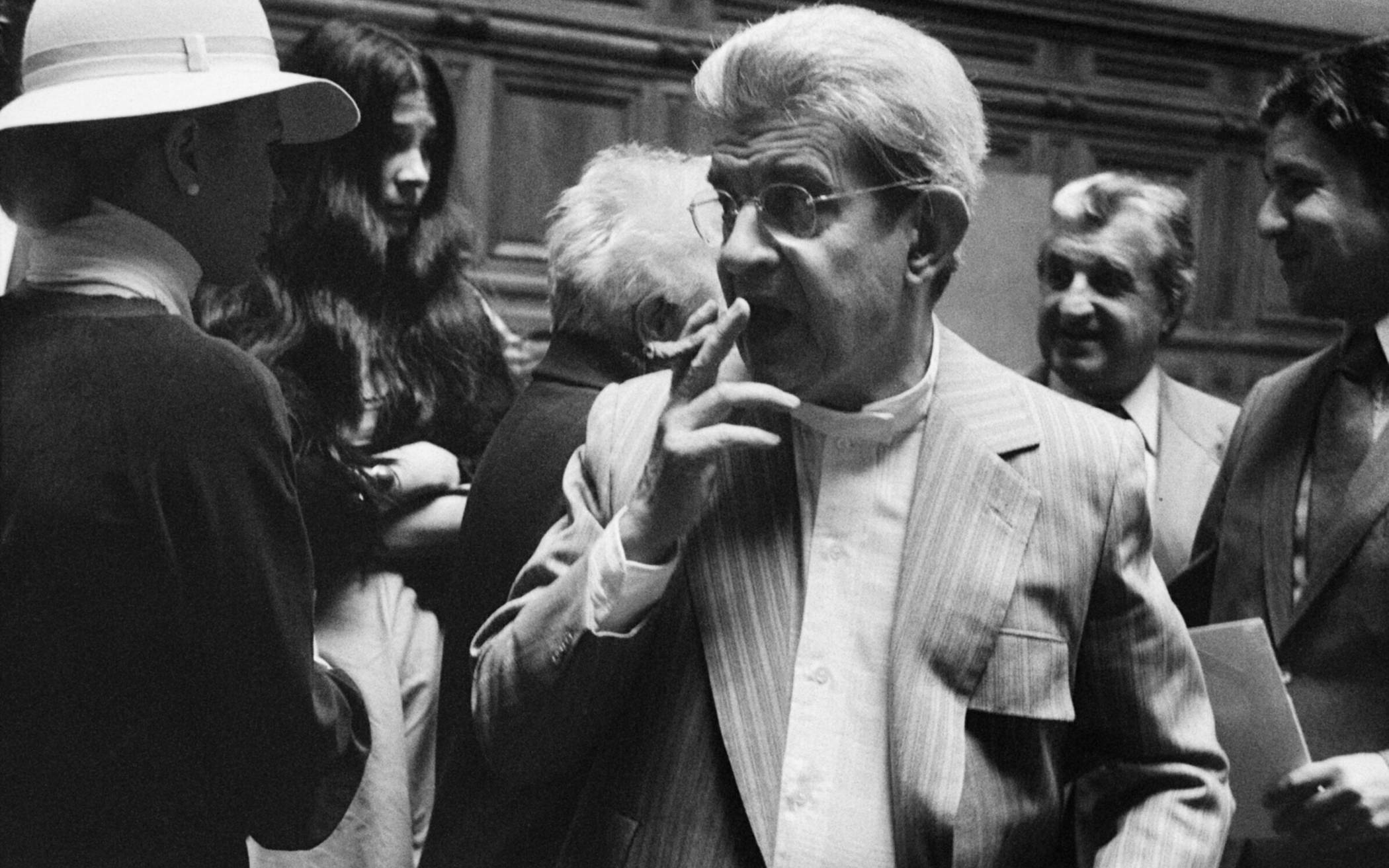
Theory of the Subject - Jacques Lacan
Lacanian psychoanalysis, formulated by French psychiatrist Jacques Lacan, reinterprets Freudian theory through structural linguistics, semiotics, and continental philosophy.[1] Centered on the dictum that "the unconscious is structured like a language," Lacanian framework replaces biological drive theory with a structural topology composed of three intersecting registers: the Imaginary, the Symbolic, and the Real.[1:1]
Here is a comprehensive structural breakdown of Lacanian psychoanalytic theory, its core mathemes, and its clinical applications.
Conceptual Foundations: The Return to Freud
Lacan’s theoretical project began in the 1950s under the slogan of a "Return to Freud" (Retour à Freud).[1:2] He argued that post-Freudian psychoanalysis—particularly Anglo-American Ego Psychology promoted by Heinz Hartmann, Ernst Kris, and Rudolph Loewenstein—had corrupted Freud's discovery.[1:3] Ego psychology treated analysis as an adaptive tool to strengthen the patient's ego and conform them to social norms. Lacan rejected this approach, asserting that the ego is not an agency of autonomy, but the locus of neurosis and self-deception.[1:4]
Lacan re-read Freud through three major intellectual currents:
-
Ferdinand de Saussure’s Linguistics: Reinterpreting the unconscious mechanisms of condensation and displacement as linguistic operations (metaphor and metonymy).[2]
-
Claude Lévi-Strauss’s Structural Anthropology: Conceptualizing culture and human relations as symbolic exchange networks governed by rules.[1:5]
-
G.W.F. Hegel's Dialectics: Adapted through Alexandre Kojève's Paris lectures, emphasizing the role of the Other in self-consciousness and human desire.[1:6]
The Three Registers (ISR Triad)
Lacan organized human experience and psychical reality into three intertwined registers: the Imaginary, the Symbolic, and the Real.[1:7]
Lacan depicted these registers using the Borromean Knot—a topological figure where three rings are interlocked such that if any single ring is cut, all three fall apart.
       Symbolic
        /    \
       /      \
  Imaginary -- Real
The Imaginary (l'Imaginaire)
The Imaginary is the realm of visual images, ego identifications, dual relationships, and illusions of wholeness.[1:8] It is governed by specular rivalry and fascination.
-
The Mirror Stage (Le stade du miroir): Occurring between 6 and 18 months of age, the infant perceives its fragmented body (corps morcelé) and identifies with an external, unified image in a mirror or through the mother's gaze.[1:9]
-
Ego Alienation: This identification creates the Ideal Ego (
). The subject becomes fundamentally alienated, mistaking an external, static image for their internal subjective reality.[1:10]
The Symbolic (l'Symbolique)
The Symbolic is the domain of language, social law, kinship structures, and culture.[1:11] It transforms the human animal into a speaking subject (parlêtre).
-
The Big Other (l'Autre,
): The radical alterity or trans-individual locus of language and law. Unlike the little other (autre, ), which is a projection of the ego, the Big Other represents the structural framework of speech itself.[1:12] -
Primacy of the Signifier: Lacan inverted Saussure’s formula of the signifier over the signified (
), placing the Signifier ( ) above the Signified ( ) separated by a bar of repression.[2:1] Meaning is never fixed; it glides continuously along the signifier chain.
The Real (l'Réel)
The Real is that which resists symbolization and imaginary representation entirely.[1:13]
-
It is not objective physical reality (which is mediated by Symbolic and Imaginary coordinates).
-
It represents the traumatic, impossible surplus that cannot be articulated in language or held in an image.[1:14]
-
It erupts in moments of severe trauma, psychosomatic symptoms, or systemic breakdowns of the Symbolic order.
Key Theoretical Concepts and Mathemes
Need, Demand, and Desire
Lacan established a strict tripartite distinction between need, demand, and desire:
| Category | Definition | Relation to Language |
|---|---|---|
| Need | Biological imperative (e.g., hunger). | Pre-linguistic; satisfiable by a specific physical object. |
| Demand | Need articulated through language addressed to the Big Other. | Transforms physical request into a demand for love and recognition. |
| Desire | The residual gap leftover when Need is subtracted from Demand ( |
Insatiable and perpetual; can never be fulfilled by any concrete object.[3] |
Because desire is mediated through the Symbolic order, Lacan famously declared: "Man's desire is the desire of the Other" (Le désir de l'homme est le désir de l'Autre).[3:1] The subject desires what the Other desires, or seeks to become the object of the Other's desire.
The Objet Petit a (Object-Cause of Desire)
The
Paternal Function and Subjective Structures
Lacan re-interpreted the Freudian Oedipus complex as a linguistic transition governed by the Name-of-the-Father (Nom-du-Père).[1:15] The paternal function breaks the dual imaginary unity between child and mother by enforcing Symbolic Castration (the introduction of the Law and the Incest Taboo).[1:16]
Lacan categorized clinical diagnostic structures based on the subject's defense mechanism against Symbolic Castration:
-
Neurosis (Repression / Verdrängung): The subject integrates the Name-of-the-Father into the Symbolic register, acknowledging symbolic castration and experiencing conflict between conscious speech and unconscious desire.[1:17]
-
Psychosis (Foreclosure / Verwerfung): The subject rejects the Name-of-the-Father from the Symbolic register entirely.[1:18] When a symbolic demand arises that requires the Name-of-the-Father, the Symbolic collapses, causing the Real to erupt as hallucinations or delusions.[1:19]
-
Perversion (Disavowal / Verleugnung): The subject recognizes symbolic castration but simultaneously disavows it, creating a fetish object to substitute for the maternal lack.
The Four Discourses
In Seminar XVII (The Other Side of Psychoanalysis), Lacan formalized four distinct modes of social link and communication using algebraic mathemes.[2:4]
Each discourse rotates four structural positions:
Using four term variables:
1. The Master's Discourse
Governed by authority and command, hiding the division of the subject under an assertion of mastery.
2. The University Discourse
Governed by objective, systemic knowledge, masking the underlying master signifiers of institutional authority.
3. The Hysteric's Discourse
Governed by the divided subject questioning authority and demanding that the Master produce new knowledge.
4. The Analyst's Discourse
Governed by the analyst operating from the position of
Clinical Methodology & Practice
Lacanian clinical technique differs fundamentally from standardized psychotherapy and classical IPA (International Psychoanalytical Association) guidelines.[1:20]
Variable-Length Sessions (Scansion)
Rather than operating on a fixed clock (e.g., 50 minutes), Lacanian analysts utilize variable-length sessions.[1:21] The analyst uses scansion—cutting the session abruptly at a specific word, ambiguous phrase, or slip of the tongue.[1:22]
- Clinical Purpose: Standard fixed sessions allow the patient's ego to engage in calculated rationalization. Ending a session unexpectedly acts as a punctuation mark, forcing the analysand to reflect on the specific unconscious signifier produced at that moment.[4]
Traversing the Fantasy (Traverser le fantasme)
The ultimate objective of Lacanian analysis is not ego adaptation, symptom removal, or societal integration, but the realization of the fundamental fantasy (
Through analysis, the subject comes to realize that the Big Other does not possess the ultimate key to their being (the Big Other itself is lacking:
Resonant Notes
The following notes in the vault resonate with Lacanian theory of the subject and the construction/deconstruction of the self:
Identity & Ego Construction
- Travis Bickle - Identity Fragmentation and The Savior Complex — Directly applies Lacanian Mirror Stage and psychosis (Foreclosure of the Name-of-the-Father) to analyze Travis Bickle's ego-splitting and paranoid delusion in Taxi Driver.
- Gestalt and Buddhism-Reality Construction — The self as an illusory Gestalt — a cognitive synthesis mistaken for a permanent entity — parallels Lacan's claim that the ego is a misrecognized image formed in the Mirror Stage, an alienating construct rather than a true core.
- Dissolving vs. Evolving-The Self in Buddhism and Jung — Contrasts the Buddhist project of deconstructing the self (closer to Lacan's divided subject) with Jung's integration model, offering a comparative lens for Lacan's anti-ego stance.
- Constructs of the Mind-Unmasking Consciousness in East and West — Examines the ego as a narrow, suffering-prone domain of consciousness, resonating with Lacan's distinction between the ego (Imaginary) and the subject of the unconscious (Symbolic/Real).
No-Self & The Divided Subject
- The Core Distinction-Epistemologies of Consciousness and Awareness in Nāgārjuna's Madhyamaka and Jungian Analytical Psychology — Madhyamaka emptiness (the self as empty of inherent existence) parallels Lacan's divided subject (
) — a subject constituted by lack, with no substantial core. - William James and the Landscape of Eastern Thought — James's distinction between "Sciousness" (pure awareness without a self) and "Con-sciousness" (ego-driven awareness) maps onto Lacan's pre-Mirror Stage (fragmented body) versus post-Mirror Stage subject alienated in language.
- Jung And Buddha Common Ground — The mandala as an archetype of wholeness represents the symbolic attempt to integrate the fragmented psyche — a fantasy of wholeness that Lacan would identify as the Imaginary lure of the unified self.
The Objet a in the Digital Age
- AI Love Connection - The Illusion of Frictionless Intimacy — The AI companion functions as a digital objet petit a — an object that promises complete fulfillment but delivers only an echo of the user's own desires, directly echoing the Mirror Stage dynamic.
- The Digital Mirror and the Lotus — Extends the mirror metaphor into the digital age, describing AI algorithms as trapping users in a feedback loop of their own desires — a technological instantiation of Lacan's insight that desire is always the desire of the Other.
Backlinks
-
Jean-Paul Sartre — Sartre's "The Look" (Le Regard) and Lacan's Mirror Stage converge on the same insight: identity is constituted through the gaze of the Other. Where Sartre describes the anguish of being objectified by another's perception, Lacan describes the alienation of mistaking an external image for the self. Both diagnose the subject as fundamentally divided and constituted by lack.
-
Franz Kafka — Lacan's Real — that which resists symbolization and erupts traumatically — maps directly onto Kafka's universe. Josef K.'s arrest and Gregor Samsa's transformation are eruptions of the Real that shatter the Symbolic order, leaving the subject trapped between meaninglessness and an impossible search for authority.
-
Defining a Simulacrum — The Mirror Stage: the infant identifies with an external image, mistaking it for their true self. This is the foundational simulacrum of identity — a copy (the mirror image) that replaces the original (the fragmented body). Lacan's Imaginary realm is a factory of simulacra.
-
Herman Northrop Frye (1912–1991) — Lacan's synthesis of Saussurean linguistics and Lévi-Strauss's structural anthropology mirrors Frye's own structuralist approach to literature. Both thinkers treated cultural products as systems governed by underlying codes and symbolic exchange networks.
-
Northrop Frye's - Anatomy of Criticism — Lacan's Symbolic Order (language, law, kinship structures) parallels Frye's conception of literature as an autonomous "verbal universe" governed by internal structural logic. Both treat cultural products as systems governed by underlying codes and symbolic exchange networks.
-
Continental Philosophy — Lacan is a central figure in post-structuralist thought, reinterpreting Freud through structural linguistics and semiotics. His critique of the autonomous subject, his emphasis on language as the structuring force of consciousness, and his engagement with Hegelian dialectics make him a quintessential Continental philosopher.
-
Continental Philosophy — Lacan is a central figure in post-structuralist thought, reinterpreting Freud through structural linguistics and semiotics. His critique of the autonomous subject, his emphasis on language as the structuring force of consciousness, and his engagement with Hegelian dialectics make him a quintessential Continental philosopher.
References
Adrian Johnston / Jacques Lacan / Stanford Encyclopedia of Philosophy ↩︎ ↩︎ ↩︎ ↩︎ ↩︎ ↩︎ ↩︎ ↩︎ ↩︎ ↩︎ ↩︎ ↩︎ ↩︎ ↩︎ ↩︎ ↩︎ ↩︎ ↩︎ ↩︎ ↩︎ ↩︎ ↩︎ ↩︎
Jacques Lacan / Écrits: The First Complete Edition in English / W. W. Norton & Company ↩︎ ↩︎ ↩︎ ↩︎ ↩︎
Internet Encyclopedia of Philosophy / Aesthetics in Continental Philosophy / IEP Article ↩︎ ↩︎ ↩︎ ↩︎ ↩︎ ↩︎ ↩︎
UK Therapy Guide / Lacanian Psychoanalysis: A Guide to Therapy, Desire & Self-Discovery / UK Therapy Guide ↩︎