Theory of Mind: The Cognitive Architecture of Social Intelligence
Theory of Mind (ToM) is the foundational cognitive capacity to attribute unobservable mental states—such as beliefs, desires, intents, knowledge, and emotions—to oneself and others. This psychological construct enables humans to predict, explain, and navigate complex social behaviors by recognizing that others have internal worlds distinct from their own.
Definitional Overview & Philosophical Roots
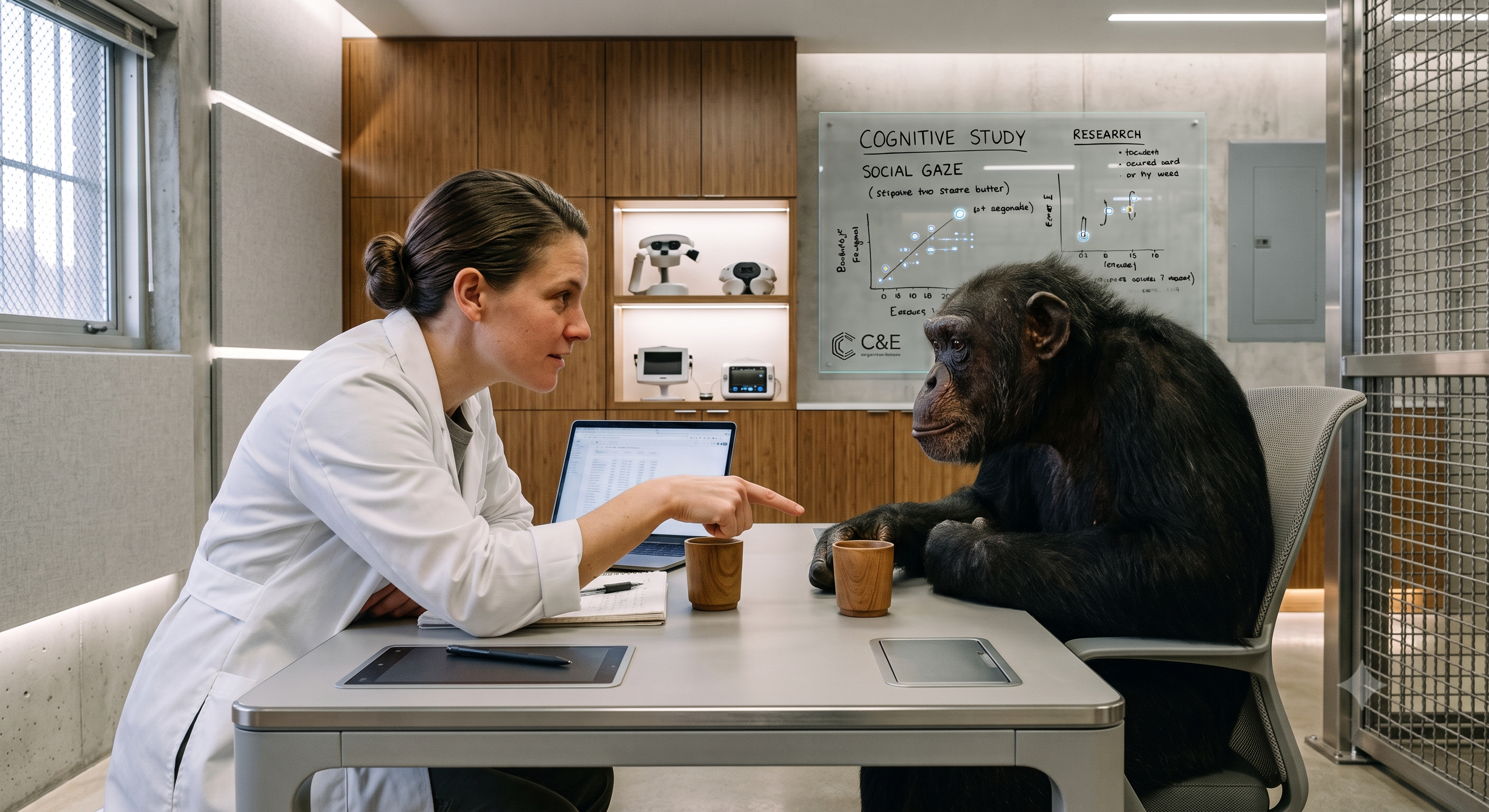
Theory of Mind operates as an implicit mechanism that allows an observer to perceive the mind as a "generator of representations."[1] Because an individual cannot directly observe another person’s consciousness, the existence and architecture of these internal mental states must be inferred.[1:1] This cognitive mechanism was first formalized in a landmark 1978 paper by primatologists David Premack and Guy Woodruff, who investigated whether chimpanzees could comprehend human intentionality.[2]
Historically, Jean Piaget mapped the foundations of child egocentrism, asserting that young children struggle to decouple their own sensory worldview from the perspectives of others.[3] Today, cognitive science views ToM not merely as a single trait, but as a hypercognitive capability requiring extensive biological maturation and social scaffolding.[1:2]
Developmental Milestones & The False-Belief Paradigm
The development of ToM typically unfolds across a predictable sequence throughout early childhood:
-
Infancy (0–18 Months): Early precursors include gaze-following, joint attention, and facial imitation, which suggest an implicit understanding of agency.[4]
-
Age 2–3: Children develop an explicit understanding of basic desires and emotions. They realize that if a person wants something, they will feel happy upon getting it and sad if they do not.[5]
-
Age 4–5: The landmark shift occurs here, where children transition from understanding subjective desires to representing false beliefs—the realization that a person can hold a cognitive representation of the world that contradicts objective reality.[5:1]
The Classic False-Belief Task
The standard test for an established Theory of Mind is the "Sally-Anne Task" (or unexpected contents paradigm).
-
Scenario: Sally puts a marble in her basket and leaves the room. Anne moves the marble to her box. Sally returns.
-
The Core Question: "Where will Sally look for her marble?"
-
The Threshold: Children under 3 or 4 typically answer "the box" (projecting their own knowledge onto Sally). By age 4 or 5, neurotypical children cross the threshold and answer "the basket," demonstrating an explicit realization that Sally holds an incorrect mental state.[3:1][5:2]
Neurobiological Correlates: The Mentalizing Network
Functional neuroimaging (fMRI) has revealed a highly integrated cortical network dedicated specifically to social cognition and mental state processing.[6] Rather than relying on a single isolated region, ToM is mediated by a specialized structural ensemble:
| Brain Region | Functional Role in Theory of Mind |
|---|---|
| Right Temporo-Parietal Junction (rTPJ) | Selectively processes thoughts, transient beliefs, and cognitive states of others.[7] |
| Medial Prefrontal Cortex (mPFC) | Integrates self-reflection, long-term social knowledge, and triadic relationships.[7:1] |
| Superior Temporal Sulcus (STS) | Detects biological motion, gaze direction, and visual intent cues.[6:1] |
| Temporal Poles (Bilateral) | Retrieves personal autobiographical memories and social narratives to contextualize current observations.[6:2] |
While the rTPJ activates selectively during tasks requiring calculations of explicit beliefs, the mPFC displays significant functional overlap with self-reflection and personal narrative paradigms, representing a broader human "social brain."[7:2]
Core Theoretical Frameworks
Cognitive scientists generally split into two main camps regarding how ToM is represented computationally within the human mind:
-
Theory-Theory (TT): Posits that children construct a folk-psychological framework composed of causal laws and abstract principles regarding human behavior.[2:1] Cognitive development mimics scientific paradigm shifts; as children encounter anomalous input, they iteratively adjust their cognitive models.[4:1]
-
Simulation Theory (ST): Argues that we do not use abstract laws. Instead, we use our own cognitive and emotional machinery as a "sandbox." We mentally simulate the other person's situation, run it through our own decision-making loops, and project the outcome onto them.[2:2]
Clinical and Divergent Manifestations
Disruptions or differences in the development of Theory of Mind are core features of several clinical conditions:
-
Autism Spectrum Disorder (ASD): Classically described as "mind-blindness," many individuals on the autism spectrum face profound difficulties passing traditional explicit false-belief tasks.[4:2] Modern neuropsychology views this not as a complete lack of empathy, but as an alternative style of processing complex, fluid social intuitions.
-
Schizophrenia: Often exhibits a distorted, hyper-intentional application of ToM. Individuals experiencing persecutory delusions may over-attribute complex, malicious intentions to benign environments or neutral actors, representing a hyper-mentalizing failure.[1:3][4:3]
References
Would you like to dive deeper into how contemporary large language models approach Theory of Mind, or explore the nuances of the Simulation Theory framework?
Wikipedia / Theory of mind / en.wikipedia.org ↩︎ ↩︎ ↩︎ ↩︎
Raymond A. Mar / Are there theory of mind regions in the brain? A review of the neuroimaging literature / pmc.ncbi.nlm.nih.gov ↩︎ ↩︎ ↩︎
Cambridge University Press / Theory of Mind in Childhood / cambridge.org ↩︎ ↩︎
Stephanie M. Carlson, Melissa A. Koenig, and Madeline B. Harms / Theory of mind / sites.socsci.uci.edu ↩︎ ↩︎ ↩︎ ↩︎
Centre of Excellence for Early Childhood Development / The Development of Theory of Mind in Early Childhood / child-encyclopedia.com ↩︎ ↩︎ ↩︎
Helen L. Gallagher and Christopher D. Frith / Functional imaging of 'Theory of Mind' / researchgate.net ↩︎ ↩︎ ↩︎
Rebecca Saxe and Nancy Kanwisher / Overlapping and non-overlapping brain regions for theory of mind and self reflection in individual subjects / pmc.ncbi.nlm.nih.gov ↩︎ ↩︎ ↩︎