Time as Change
Boltzmannian Coarse-Graining and Nagarjunian Emptiness
Gestalt and Buddhism-Reality Construction
Dissolving vs. Evolving-The Self in Buddhism and Jung
Reconciling the Control Paradigm
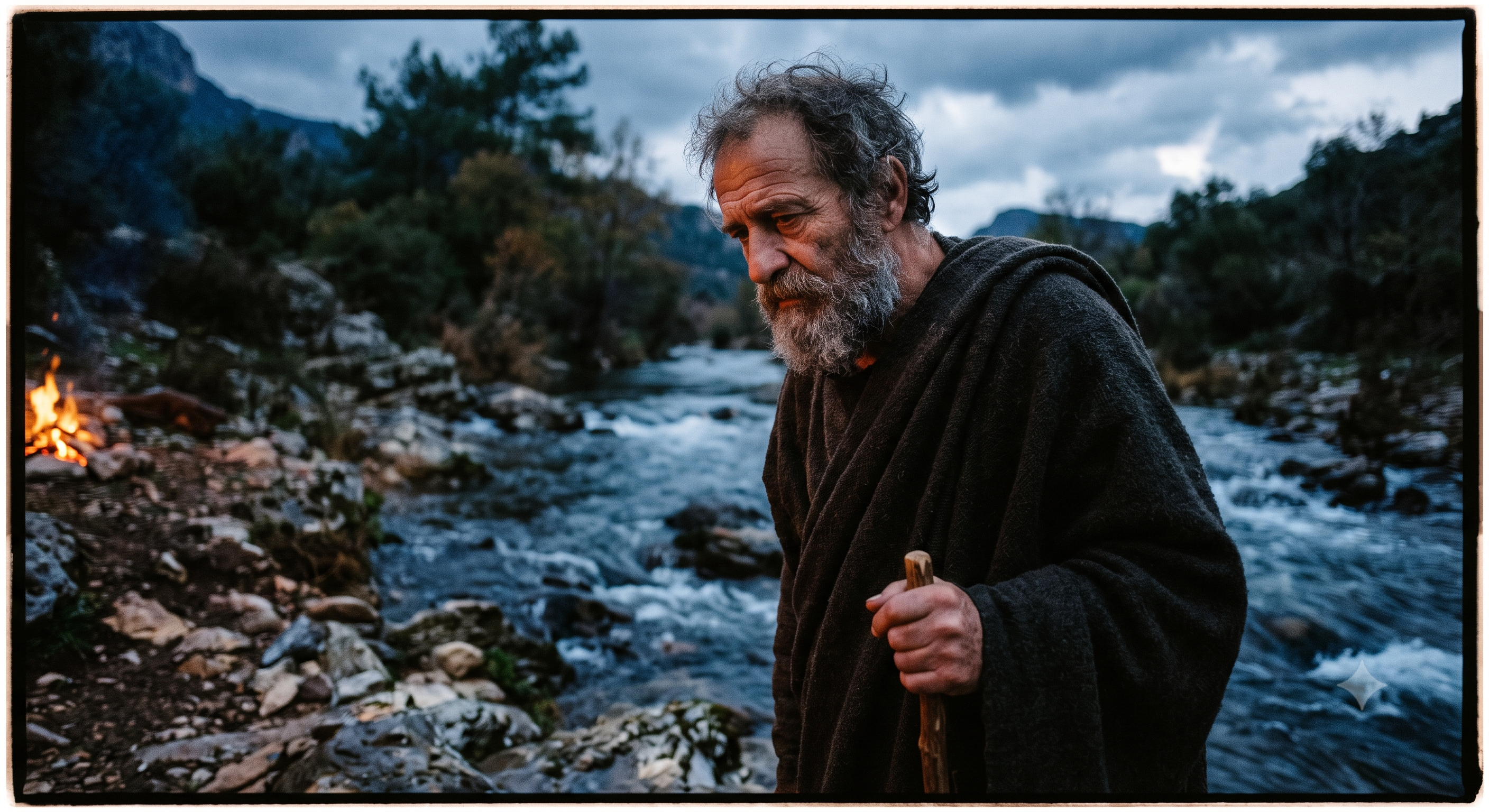
Heraclitus and the Vault's Philosophy of Change
Heraclitus of Ephesus (c. 535–475 BCE) is the Western philosophical prototype for the vault's central thesis: stasis is the illusion; flux is the reality. His fragments — panta rhei ("everything flows"), the river metaphor, the Logos as the hidden harmony of opposites — converge with Boltzmannian coarse-graining, Nāgārjuna's emptiness, Gestalt psychology, and organizational self-management to form a unified, cross-domain philosophy of change as the fundamental ontological primacy.
1. The River Fragment and the Self as Process
"You cannot step twice into the same river, for other waters are ever flowing on to you."
This single aphorism encapsulates the vault's thesis on the self across physics, Buddhism, and neuroscience:
-
Buddhist Anatta (Non-Self): The self is a temporary Gestalt of the five skandhas — form, sensation, perception, mental formations, consciousness — ceaselessly arising and passing away. The river appears continuous and stable, but it is never the same water from one moment to the next. The "self" is the river, not the water. Gestalt and Buddhism-Reality Construction
-
Boltzmannian Coarse-Graining: Macroscopic stability (a person, a table) is a statistical coarse-graining over microscopic chaos. The river's apparent permanence is an emergent property of blurring over countless molecular fluctuations. Boltzmannian Coarse-Graining and Nagarjunian Emptiness
-
Time as Change: Time is not an absolute background dimension but the metric of transformation itself. If the universe were frozen, time would cease to exist. The river's flow is not a thing moving through time; the flow is time. Time as Change
-
Gestalt Transparency: The mind groups the rapid succession of cognitive flashes into a unified "self," just as it groups proximate dots into a shape. The constructive process is invisible to the perceiver. Gestalt and Buddhism-Reality Construction
2. The Logos and Dependent Origination (Pratītyasamutpāda)
Heraclitus's Logos — the rational principle that governs the dynamic tension of opposites — is structurally homologous to the Buddhist law of dependent origination:
| Heraclitus | Vault Framework |
|---|---|
| The Logos is "common to all" yet most live as if they have private understanding | Ignorance (avidyā) of dependent arising is the root of suffering |
| Hidden harmony is "better than the obvious one" | Ultimate truth (paramārtha-satya) is obscured by conventional perception |
| The Logos regulates the tension of opposites | Nāgārjuna's Middle Way avoids the extremes of eternalism and nihilism |
Both describe an impersonal, immanent order that is not a creator deity but the pattern of how change itself operates. The Logos is not a law imposed on reality from outside; it is the relational structure of reality — exactly as dependent origination is not a cause added to phenomena but the very nature of their existence.
3. The Unity of Opposites and Madhyamaka's Deconstruction
Heraclitus's most striking claim — that war (polemos) is the father of all things, that harmony consists of opposing tensions like the bow and the lyre — resonates directly with Nāgārjuna's method in the Second Turning of the Wheel:
"The way up and the way down are one and the same." — Heraclitus
Nāgārjuna demonstrates that all conceptual categories collapse into each other when examined rigorously:
- Existence and non-existence
- Self and other
- Permanence and annihilation
- Identity and difference
Both thinkers refuse to reify any pole of a binary. The tension between opposites is not a problem to be resolved but the very structure of reality. For Heraclitus, this tension is the harmony; for Nāgārjuna, the emptiness of all views is the Middle Way.
This maps directly onto the vault's treatment of the control-autonomy paradox in organizational design: autonomy and control are not mutually exclusive poles but a complementary tension that, when held dynamically, generates adaptive self-management. Reconciling the Control Paradigm
4. Fire as the Fundamental Element and Boltzmannian Thermodynamics
Heraclitus identified fire as the primordial substance — not as a naive materialist element, but because fire is the element that is pure process: constant transformation, consuming fuel and becoming heat, light, and ash.
This anticipates the vault's use of Boltzmannian thermodynamics in three ways:
-
Fire as Coarse-Graining: A flame appears as a stable, continuous entity, but it is a statistical pattern of countless molecular reactions. The macroscopic "fire" is a coarse-grained description of microscopic chaos — exactly as a table or a person is.
-
Fire as Energy Flux: Fire is matter as a temporary configuration of energy in flux. This mirrors the Boltzmannian view that macroscopic objects are temporary statistical configurations of microstates.
-
Fire as the Arrow of Time: Fire always burns in one direction (fuel → ash). This is the thermodynamic arrow of time — entropy increase — which Boltzmann showed is an emergent property of coarse-graining, not a fundamental feature of reality.
"This world, which is the same for all, no god or man made, but it was ever, is now, and ever shall be an ever-living fire, kindled in measure and quenched in measure." — Heraclitus
5. The Third Turning and the Positive Nature of Flux
Heraclitus's Logos is not merely destructive change — it is a harmonious, ordered principle that governs the tension of opposites. This aligns with the Third Turning's move beyond the purely negative deconstruction of emptiness toward a positive, luminous description of reality.
The Third Turning's pariniṣpanna-svabhāva (consummated nature) — reality experienced free of dualistic projection — is Heraclitus's hidden harmony, "better than the obvious one." The Three Turnings of the Wheel - Hermeneutics of Mahāyāna Philosophy
Both frameworks agree that:
- Change is not chaos; it has an immanent order
- This order is not imposed from outside but is the relational structure of reality itself
- Liberation consists of aligning oneself with this order, not resisting it
6. What Heraclitus Adds: The Aesthetic Dimension of Change
What Heraclitus contributes that the vault's existing framework has not yet fully articulated is the aesthetic dimension of change. He describes the tension of opposites not as something to be escaped (as in Buddhist nirvāṇa as the cessation of craving) but as something to be appreciated as beautiful:
"From out of all the many particulars comes oneness, and out of oneness come all the many particulars."
The bow and the lyre — instruments of death and of music — are both powered by opposing tensions pulling in opposite directions. Heraclitus sees this not as suffering but as the very structure of harmony.
This offers a complementary lens to the vault's Buddhist framework:
| Dimension | Buddhist Emphasis | Heraclitean Emphasis |
|---|---|---|
| Change is... | The truth to be realized (Wisdom) | The source of beauty to be celebrated (Aesthetics) |
| The source of suffering | Clinging to what changes | Resisting the tension of opposites |
| Liberation | Cessation of craving | Alignment with the Logos |
| The self | An illusion to be seen through | A temporary harmony to be appreciated |
7. Synthesis: The Unified Thesis
Heraclitus provides the Western philosophical archetype for the vault's central claim:
Reality is not a collection of stable things that sometimes change; it is a field of ceaseless change from which the appearance of stable things temporarily emerges.
The self, the organization, the economy, the atom, the aesthetic preference — all are processes masquerading as entities, held stable only by the coarse-graining of perception or the temporary alignment of conditions.
Heraclitus's river is the master metaphor that unifies:
- Physics: Time as change, coarse-graining, relational quantum mechanics
- Buddhism: Impermanence (anicca), emptiness (śūnyatā), non-self (anatta)
- Psychology: Gestalt construction, the self as process, the stream of consciousness
- Management: Self-organization, adaptive systems, process over structure
- Art: The generative paradigm, process over product, the beauty of flux
"The river where you would step is the same, yet not the same, for the waters are ever new." — Heraclitus (paraphrase)
References
- Heraclitus, Fragments (Diels-Kranz numbering)
- Time as Change
- Boltzmannian Coarse-Graining and Nagarjunian Emptiness
- Gestalt and Buddhism-Reality Construction
- Dissolving vs. Evolving-The Self in Buddhism and Jung
- Reconciling the Control Paradigm
- The Three Turnings of the Wheel - Hermeneutics of Mahāyāna Philosophy
- Notes in the vault that resonate with Brian Eno's philosophy, organized by the key themes they share