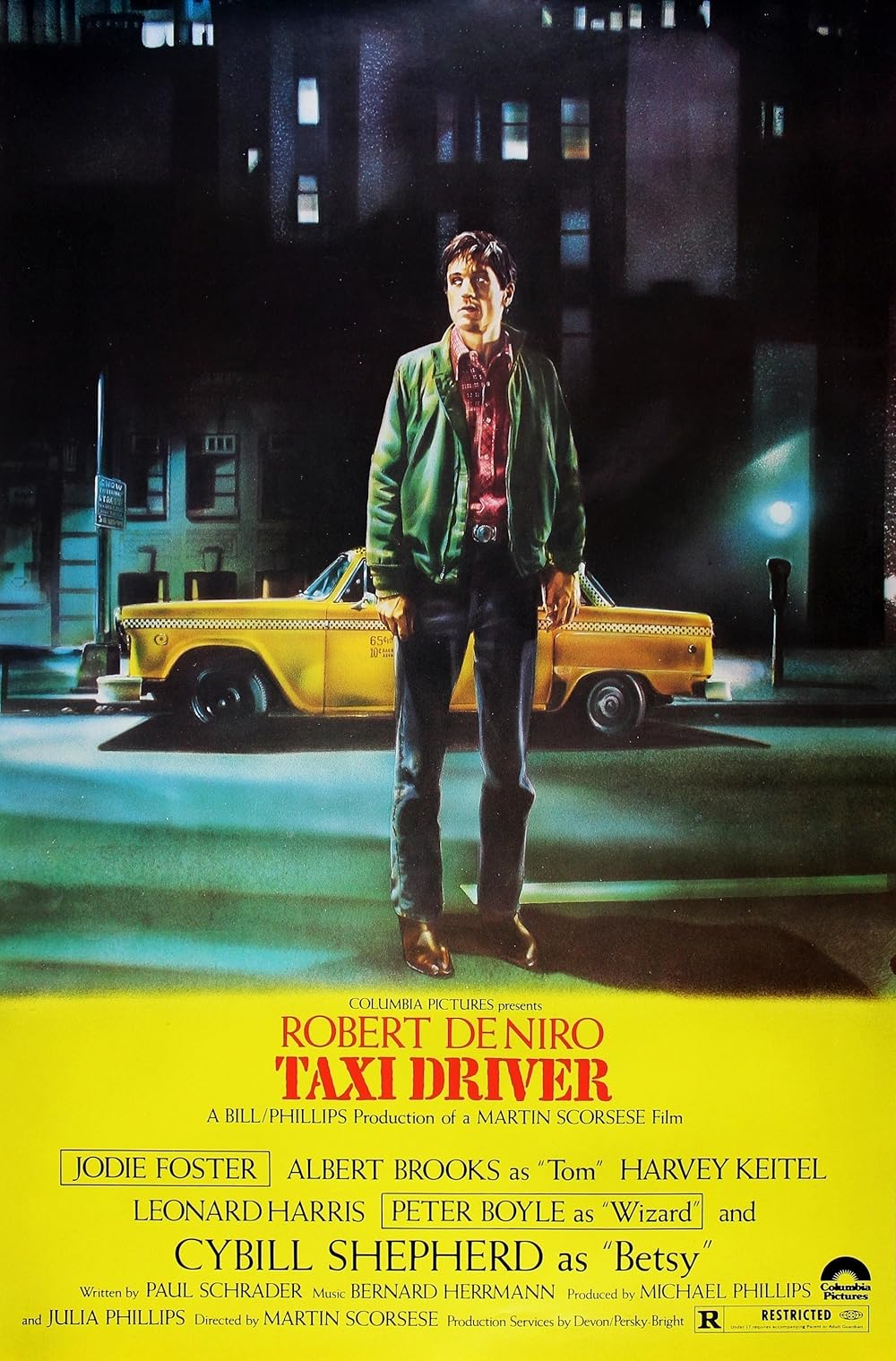
Travis Bickle - Identity Fragmentation and The Savior Complex
Travis Bickle - Identity Fragmentation and The Savior Complex
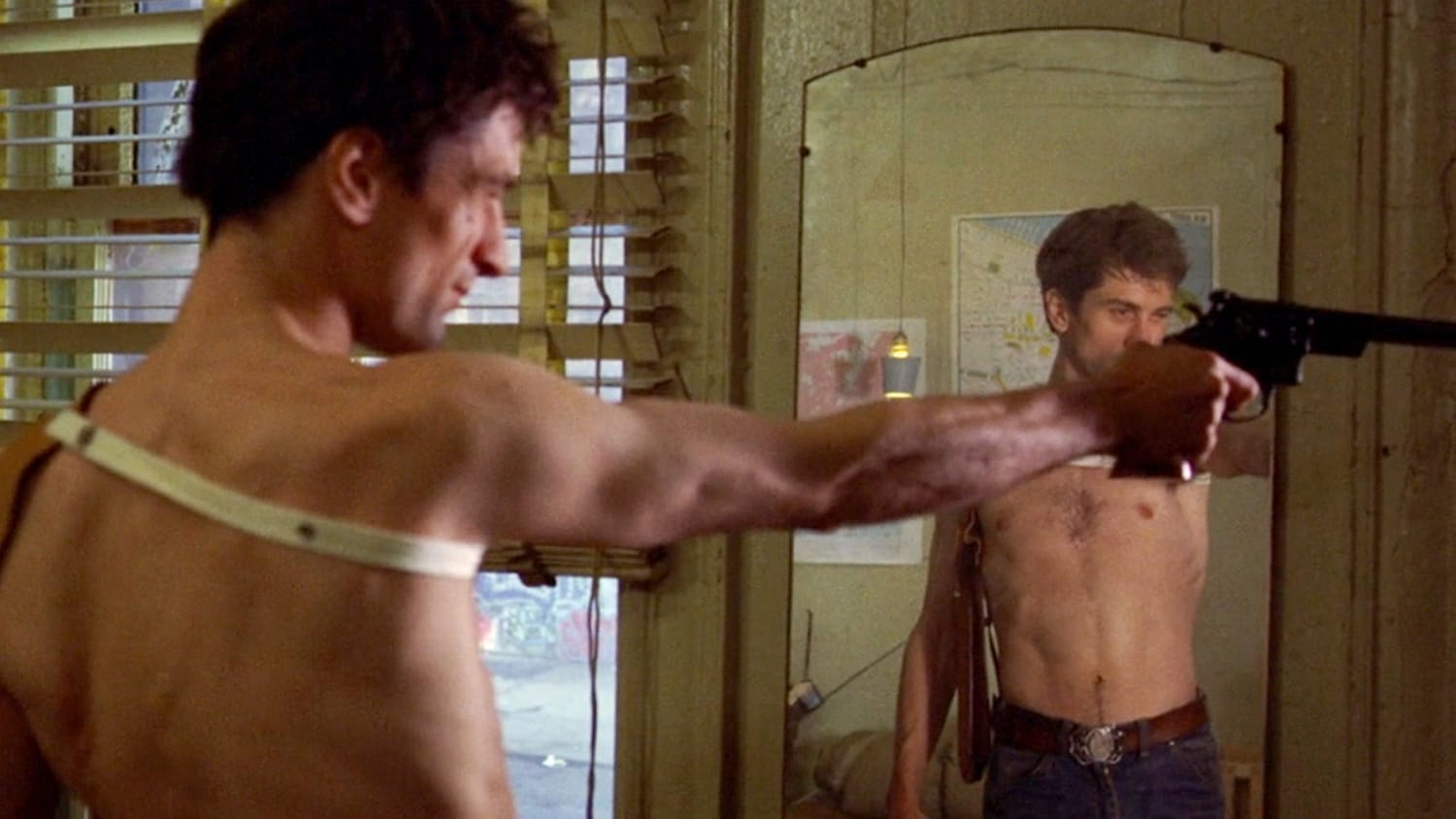
The mirror scene in Martin Scorsese’s Taxi Driver (1976) serves as a classic cinematic representation of ego-dissolution, parasocial dissociation, and identity fragmentation. Unable to integrate into post-Vietnam urban society, Travis Bickle utilizes his reflection to split his persona into a dual structure: the impotent, rejected victim and the hyper-masculine, violent avenger. Through psychoanalytic, clinical, and sociological lenses, Travis's confrontation with his own reflection reveals how existential loneliness and untreated trauma transform latent suicidality into outward, ritualized violence.
Psychoanalytic & Identity Dynamics
The Lacanian Split and Mirror Stage
In Lacanian psychoanalysis, the "mirror stage" marks the developmental moment when an individual recognizes their reflection and forms an idealized image of an integrated self (the Ego).[1] In Taxi Driver, Travis Bickle undergoes a regressive, pathological mirror stage where his internal selfhood collapses under prolonged isolation.[2] Lacking a stable adult identity or functional social bonds, Travis uses the glass to construct a rigid, artificial persona to replace his fractured inner self.
-
Ego Splitting (Spaltung): Travis cannot reconcile his lived reality—a socially illiterate, chronically lonely cab driver—with his desired identity as a heroic protector. By confronting his reflection, he projects his internal pain onto an externalized "Other".[3]
-
The Imaginary Adversary: When Travis repeatedly addresses his reflection as a hostile threat ("You talkin' to me?"), he manufactures a hypothetical enemy out of empty space. Because he cannot engage in authentic human dialogue, he creates a parasocial confrontation where he controls both the aggressive provocation and the lethal response.[4]
Covert Suicidality and Self-Annihilation
The climax of the mirror interaction occurs when Travis draws his hidden firearm, aims it directly at his reflection's forehead, and announces its destruction. This action highlights the paradoxical core of his psychological breakdown:
-
Displaced Suicide: Unable to resolve his intense self-hatred, Travis's crusade against urban corruption is fundamentally a displaced form of suicidal ideation. Explicitly acknowledging that he is "the only one here," pointing the gun at the mirror is functionally aiming the weapon at his own head through a paranoid, psychotic filter.[5]
-
Narcissistic Suicidal Aggression: In severe personality disorders accompanied by grandiose delusions, the individual seeks death through a public spectacle of violence. Travis prepares to destroy his physical vessel so that his ideal, mythicized image can survive.
Clinical Perspectives: Trauma, Dissociation, and STPD
Post-War PTSD and Sensory Overload
Travis's psychological decay is rooted in unaddressed combat trauma. Returning from Vietnam into 1970s New York City, he experiences severe insomnia, emotional blunting, and chronic hypervigilance.[6]
Screenwriter Paul Schrader drew on Fyodor Dostoevsky’s Notes from Underground and Thomas Wolfe’s essay God's Lonely Man to formulate Travis's solipsistic worldview, framing his paranoia as an extreme reaction to urban alienation.
-
Restructuring Space: Deprived of a military operational framework, Travis transforms his small, decaying apartment into a personal combat zone.
-
Hypervigilance as Control: His obsessive rehearsal in front of the mirror is a post-traumatic coping strategy—an attempt to achieve absolute control over an environment he perceives as unpredictable and hostile.
Schizotypal and Antisocial Manifestations
From a clinical diagnostic standpoint, Travis exhibits symptoms spanning Schizotypal Personality Disorder (STPD) and Antisocial traits:[7]
-
Paranoid Ideation: He interprets benign or neutral social interactions as existential slights or systemic threats.
-
Emotional Detachment & Grandiosity: He experiences profound apathy toward human connection while harboring grandiose delusions that he is uniquely chosen to "cleanse" the city.
The Mechanization of the Self
The Body as an Automated Weapon
Travis's modification of his clothing and the construction of his spring-loaded sleeve holster represent a physical attempt to erase human vulnerability.
-
Elimination of Affect: By automating the quick-draw mechanism, Travis seeks to remove emotional hesitation from his actions. The body ceases to be an instrument of feeling and becomes a machine built purely for execution.
-
Militarized Hyper-Masculinity: Stripped of genuine masculine agency through continuous social rejection, Travis adopts hyper-masculine combat aesthetics (mohawk, field jacket, concealed weapons) as emotional armor.
Psychological Defense Matrix
| Defense Mechanism | Internal Psychological Need | External Manifestation in Mirror Scene |
|---|---|---|
| Projection | Offload unbearable feelings of worthlessness and internal disgust. | Labels the external world "scum" and "filth," converting internal shame into moral outrage. |
| Dissociation | Detach from the overwhelming pain of social isolation and rejection. | Replaces real human interaction with simulated, hostile dialogues before glass. |
| Reaction Formation | Mask intense feelings of physical and emotional powerlessness. | Adopts an aggressive, hyper-vigilant military stance armed with concealed weapons. |
| Splitting | Divide the world into pure good and irredeemable evil to avoid cognitive complexity. | Views himself as the sole righteous avenger standing against absolute moral corruption. |
Pathological Heroism and the Savior Complex
Travis Bickle's psychological degradation highlights how profound social isolation can mutate into violent vigilante action. When his attempts to form normal social connections fail—most notably with Betsy and later with Iris—his fragile ego cannot process the rejection. Rather than accepting his interpersonal deficits, his mind restructures reality: he converts his inability to connect into a divine mandate to destroy. The mirror scene captures the exact inflection point where his internal despair sharpens into an active, lethal mission, showing how an isolated individual constructs a mythic identity to rationalize ultimate self-destruction.
Resonant Notes in the Vault
The following notes in the vault share thematic, philosophical, or psychological resonance with the Travis Bickle analysis:
Lacanian & Psychoanalytic Framework
- Theory of the Subject - Jacques Lacan — Directly provides the Lacanian framework (the Three Registers, Mirror Stage, Symbolic Castration, and the Psychosis/Foreclosure structure) that underpins the analysis of Travis's ego-splitting and paranoid delusion.
Identity Fragmentation & Ego Dissolution
- Dethroning the Ego - Rael's Journey Through the Subterranean Mythos of Genesis — Rael's journey through the underworld mirrors Travis's descent: both protagonists confront a split self, and Rael's climactic realization that his brother's face is his own face parallels Travis's inability to recognize his reflection as himself.
- The Drop and the Ocean - The Spiritual Architecture of Quadrophenia — Jimmy's four-way personality split ("quadrophenia") and his systematic stripping of external anchors (psychiatrist, family, church, subculture) directly parallel Travis's identity fragmentation and existential alienation.
- Dissolving vs. Evolving-The Self in Buddhism and Jung — Explores the Persona as a constructed mask and the pathology of over-identification with social roles — directly relevant to Travis's rigid, militarized persona.
- Gestalt and Buddhism-Reality Construction — The self as an illusory Gestalt — a cognitive synthesis mistaken for a permanent entity — explains how Travis's constructed identity as "righteous avenger" is a reified phantom he will kill to defend.
Shadow Projection & the Denied Self
- Jung And Buddha Common Ground — Jung's Shadow concept and the mechanism of projection are directly operative in Travis: his repressed aggression is projected onto the external world as "scum" and "filth," justifying his violent crusade.
- Constructs of the Mind-Unmasking Consciousness in East and West — The Jungian analysis of ego-inflation and neurosis arising from the refusal to integrate unconscious material — Travis's ego refuses to yield, and his neurosis mutates into lethal action.
- The Core Distinction-Epistemologies of Consciousness and Awareness in Nāgārjuna's Madhyamaka and Jungian Analytical Psychology — The "heroic and tragic task" of dismantling a restricted identity — a process Travis violently refuses, choosing instead to fortify his delusion.
Savior Complex & Pathological Heroism
- Joseph Campbell and the Hero's Journey — Travis's trajectory is a perversion of the Hero's Journey: he enters the "Road of Trials" but refuses the Apotheosis (ego death), instead weaponizing the mythic structure to justify mass violence.
- Incapable of Ever Taking the Blame — The analysis of how a reified Gestalt of the self mobilizes cognitive defenses against threats to identity — Travis's entire psychology is a case study of this mechanism pushed to its psychotic extreme.
Existential Alienation & Urban Dread
- The Existential Paradox of Annie Hall's Opening Monologue — Shares the same urban existential dread and loneliness that fuels Travis's breakdown, though Alvy Singer processes it through comedy rather than violence.
- The Philosophical Worldview of Fyodor Dostoevsky — Schrader explicitly drew on Dostoevsky's Notes from Underground for Travis's solipsistic worldview; the note explores Dostoevsky's underground man as a prototype of alienated, reactive consciousness.
- The Matter With Things Analysis — McGilchrist's diagnosis of left-hemisphere dominance as a societal pathology — the "unmaking of the world" through abstraction, control, and fragmentation — mirrors Travis's mechanization of the self and his reduction of the world to a combat zone.
The Mechanized Self & Digital Dissociation
- Media Theory Concept Research — McLuhan's "discarnate man" — individuals stripped of physical presence who exhibit aggressive lack of empathy — resonates with Travis's parasocial dissociation and his transformation of the body into a weaponized machine.
- Don DeLillo Major Themes Analysis — DeLillo's exploration of technological eschatology and the fragility of identity when externalized systems collapse — Travis's identity is similarly fragile, held together only by the ritual of the mirror.
References
Artishock Revista / Lacan, The Exhibition: When Art Meets Psychoanalysis / artishockrevista.com ↩︎
Brunel University Research Archive / The Besieged Ego / bura.brunel.ac.uk ↩︎
Understanding Visual Culture / Visualising the 'Other' through 'Taxi Driver' / michaelmillmore.wordpress.com ↩︎
Film Studies Discussion / Analysis of the Mirror Monologue in Taxi Driver / reddit.com ↩︎
Eleni Koumidi / Lacanian Psychoanalysis & Psychosis: Paranoia / elenikoumidi.gr ↩︎
Student Film Reviews / An Analysis of Disability and Society in Taxi Driver / studentfilmreviews.org ↩︎
ResearchGate / Psychological Analysis and Diagnosis of Travis Bickle: A Case Study of Taxi Driver / researchgate.net ↩︎