Innis (1951) - The Bias of Communication
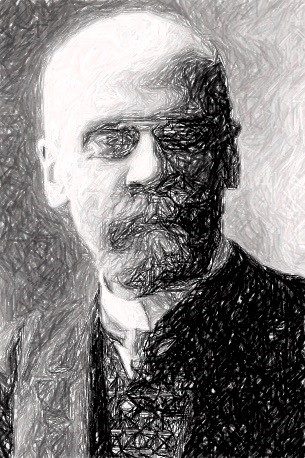
Durkheimian Sociology
Durkheimian sociology establishes society as an autonomous reality (sui generis) governed by external, coercive "social facts." Émile Durkheim shifted sociology from speculative philosophy to an empirical science, detailing how industrialization alters social solidarity, how structural integration and regulation influence individual action (including suicide), and how sacred rituals generate collective cohesion.
Resonant Connections
- Collective Consciousness Explained: Explores the sociological and media-theoretical dimensions of "collective consciousness," providing a modern framework that complements Durkheim's original conceptualization of conscience collective.
- Structural Functionalism: The macro-sociological framework that Durkheim's concepts of social facts, organic solidarity, and the organic analogy directly inspired, later systematized by Talcott Parsons and Robert K. Merton.
Theoretical Foundations: Society as a Sui Generis Reality
Émile Durkheim (1858–1917) established sociology as an independent academic discipline by asserting that human society is a sui generis reality—an entity unique to itself that cannot be reduced to individual psychological or biological processes.[1] When individual minds interact, they generate a synthetic social reality that possesses properties distinct from any of its constituent parts.
Social Facts (Faits Sociaux)
In The Rules of Sociological Method (1895), Durkheim introduced the core methodological concept of sociology: the social fact.[2] Social facts are defined as ways of acting, thinking, and feeling that meet three primary criteria:
-
Externality: They exist prior to and independent of any single individual (e.g., language, moral codes, currency systems).
-
Coercion: They exert moral or structural pressure on individuals, penalizing non-conformity through legal punishment or social ostracism.
-
Generality: They are widespread throughout a given society because they are collective, rather than being collective because they are widespread.
"A social fact is every way of acting, fixed or not, capable of exercising on the individual an external constraint; or again, every way of acting which is general throughout a given society, while at the same time existing in its own right independent of its individual manifestations."
Durkheim posited that social facts must be treated "as things" (comme des choses), meaning they must be studied empirically through objective observation rather than introspective philosophical speculation.
Social Solidarity and the Division of Labor
In his doctoral thesis, The Division of Labor in Society (1893), Durkheim examined how social order is maintained as societies transition from agrarian, pre-industrial structures to complex modern industrial states.[3]
Mechanical vs. Organic Solidarity
Durkheim identified two distinct forms of social cohesion, distinguished by their economic organization and collective consciousness (conscience collective):
-
Mechanical Solidarity: Prevalent in traditional, low-specialization societies. Social cohesion relies on strong similarity among individuals who share uniform tasks, beliefs, and values. The collective consciousness is intense, rigid, and religiously oriented.
-
Organic Solidarity: Characteristic of modern industrial societies marked by an extensive division of labor. Individuals are specialized and functionally interdependent, much like organs in a biological organism. Collective consciousness becomes more generalized, abstract, and individualized.
| Feature | Mechanical Solidarity | Organic Solidarity |
|---|---|---|
| Primary Structural Basis | Similarity and shared routines | Interdependence and specialization |
| Division of Labor | Low specialization | High specialization |
| Dominant Legal Framework | Repressive (punitive/retributive law) | Restitutive (reparative/civil law) |
| Collective Consciousness | Intense, specific, religious | Abstract, flexible, individualized |
Structural Pathologies: Anomie and Forced Division
When societies undergo rapid industrialization and structural change, the division of labor can evolve faster than the accompanying moral rules. Durkheim identified key social pathologies resulting from incomplete structural integration:
-
Anomie (Anomie): A state of normlessness or inadequate social regulation where institutional rules crumble before new norms can develop, leaving individual desires unregulated.
-
Forced Division of Labor: A condition where structural inequality or coercion forces individuals into roles unsuited to their talents, causing friction and class conflict.
Empirical Application: The Sociology of Suicide
Durkheim's landmark empirical monograph, Suicide (1897), demonstrated the power of sociological analysis by explaining an apparently personal act through structural variables.[4] By analyzing demographic data across European populations, Durkheim showed that suicide rates vary predictably according to levels of social integration (attachment to social groups) and social regulation (moral guidance provided by society).
The Fourfold Typology of Suicide
Durkheim constructed a four-part typology based on imbalances in integration and regulation:
-
Egoistic Suicide (Low Integration): Occurs when individuals are insufficiently tied to social structures (e.g., unmarried individuals, or communities with weak communal bonds).
-
Altruistic Suicide (High Integration): Occurs when an individual is so excessively integrated into a group that they sacrifice their life for the collective (e.g., military self-sacrifice).
-
Anomic Suicide (Low Regulation): Occurs during periods of dramatic socio-economic disruption or rapid economic growth/collapse, where social norms fail to constrain individual desires.
-
Fatalistic Suicide (High Regulation): Occurs under extreme social control and oppression where individual agency is entirely crushed (e.g., enslaved individuals or severe institutional incarceration).
Religion and the Sacred-Profane Dichotomy
In The Elementary Forms of Religious Life (1912), Durkheim sought the foundational building blocks of religion by studying Australian Aboriginal totemism.[5]
Key Theoretical Constructs
Durkheim rejected spiritualist and supernatural definitions of religion, framing it instead as a strictly social phenomenon centered on three core concepts:
-
Sacred vs. Profane: The universal division of human experience into the sacred (set apart, forbidden, inspiring awe) and the profane (mundane, ordinary, everyday life).
-
Collective Effervescence: High-energy group rituals where individuals experience a heightened shared emotional state. This shared energy reinforces social solidarity and makes abstract social forces feel tangible and divine.
-
Religion as Self-Worship: Durkheim concluded that when people worship sacred totems or deities, they are unknowingly worshipping society itself—the collective entity that sustains, constrains, and transcends individual life.
Modern Legacy and Structural Functionalism
Durkheim's emphasis on social structure, moral consensus, and institutional function directly inspired 20th-century structural functionalism, spearheaded by theorists like Talcott Parsons and Robert K. Merton.[6] His quantitative methodology laid the groundwork for modern empirical sociology, quantitative demography, and the sociology of law and religion. Today, Durkheimian theory remains vital for analyzing modern phenomena such as institutional erosion, economic disruption, digital social isolation, and collective ritual dynamics in contemporary culture.
References
Internet Encyclopedia of Philosophy / Émile Durkheim / IEP Entry ↩︎
Stanford Encyclopedia of Philosophy / Émile Durkheim / SEP Entry ↩︎
Encyclopaedia Britannica / Emile Durkheim: Division of Labour in Society / Britannica Article ↩︎
ThoughtCo / Durkheim's Sociology of Suicide / ThoughtCo Guide ↩︎
Routledge Encyclopedia of Philosophy / Durkheim, Émile (1858–1917) / REP Entry ↩︎
Wikipedia / Émile Durkheim / Wikipedia Entry ↩︎