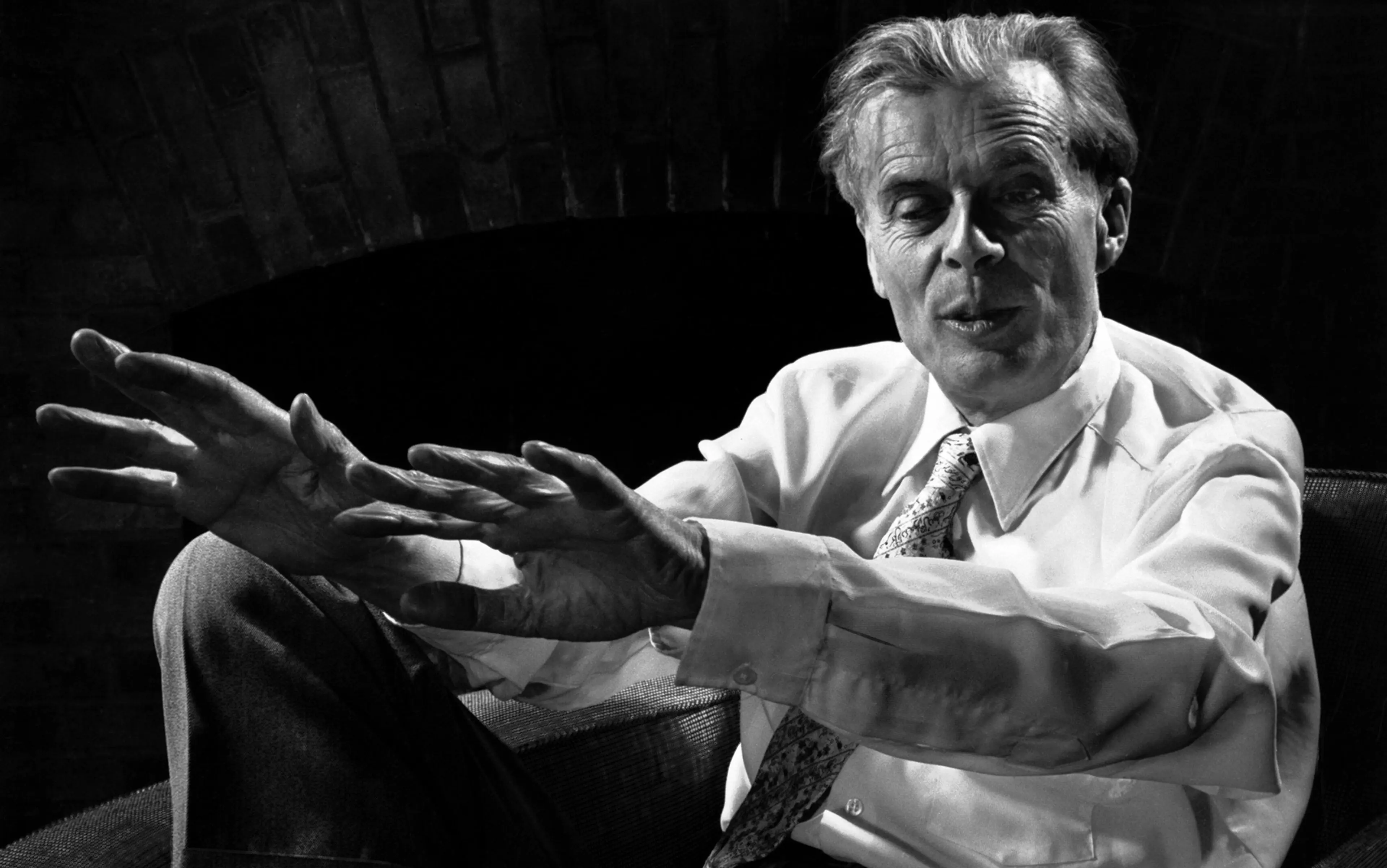
Perennial Philosophy (Philosophia Perennis) is the metaphysical worldview asserting that all major world religions and spiritual traditions share a single, foundational metaphysical truth. It posits that beneath the diverse dogmas, rituals, and historical expressions of human religion lies a universal "Highest Common Factor": an unmanifest divine reality, a divine spark within human consciousness, and a shared ultimate goal of direct spiritual realization or union with the Absolute. First given its formal name during the Italian Renaissance by Agostino Steuco and later popularized by Gottfried Wilhelm Leibniz and Aldous Huxley, perennialism remains a foundational concept in comparative religion, esoteric studies, and mystical philosophy.
Conceptual Foundations
Perennial philosophy views reality not through the lens of historical evolution or doctrinal exclusivity, but through an eternal, unchanging principle (Sophia Perennis or "Perennial Wisdom"). Rather than viewing world religions as competing systems of belief, perennialism interprets them as varied dialectical expressions of a singular underlying truth adapted to different historical, cultural, and psychological contexts.
                  ┌─────────────────────────────────┐
                  │    The Divine Ground / Absolute │
                  │  (Brahman, Tao, Gottheit, etc.) │
                  └────────────────┬────────────────┘
                                   │
              ┌────────────────────┴────────────────────┐
              ▼                                         ▼
   ┌──────────────────────┐                  ┌──────────────────────┐
   │ Esoteric Dimension   │                  │ Esoteric Dimension   │
   │ Direct Mystical      │                  │ Direct Mystical      │
   │ Realization (Inner)  │                  │ Realization (Inner)  │
   └──────────┬───────────┘                  └──────────┬───────────┘
              │                                         │
              ▼                                         ▼
   ┌──────────────────────┐                  ┌──────────────────────┐
   │ Exoteric Form A      │                  │ Exoteric Form B      │
   │ Dogma, Ritual, Laws  │                  │ Dogma, Ritual, Laws  │
   └──────────────────────┘                  └──────────────────────┘
The Fourfold Axiom of Perennialism
As articulated by Aldous Huxley in his seminal 1945 anthology, the core metaphysics of perennial philosophy can be summarized across four interdependent postulates [1]:
-
The Divine Ground: The ultimate reality is an unmanifest, transcendent, and immanent Ground of all existence (Brahman in Hinduism, Tao in Taoism, Ein Sof in Kabbalah, Gottheit in Eckhart's Christian mysticism).
-
The Human Soul: Human beings possess a dual nature: an egoic, empirical self and a transcendent, spiritual spark or intellect (Atman, Nous, Pneuma) that is inherently connected to or identical with the Divine Ground.
-
The Ultimate End: The primary purpose of human existence is to transcend the egoic self and attain direct, experiential knowledge (Gnosis, Jñana, Satori, Fana) of the Divine Ground.
-
The Ethical Path: Liberation or realization requires moral purification, self-abnegation, non-attachment, and love/compassion toward all beings.
A central thesis of perennialism—particularly within the Traditionalist School—is the division of religion into exoteric (outer) and esoteric (inner) dimensions [2]:
-
Exoteric: The external shell consisting of specific creeds, moral laws, historical narratives, and liturgical rituals. Exoteric forms are inherently pluralistic and often mutually exclusive.
-
Esoteric: The inner kernel consisting of contemplative practices, metaphysical discernment, and direct intuitive experience. Esoteric realization transcends formal doctrinal boundaries while respecting their pedagogical necessity.
Historical Evolution
Renaissance Humanism & Prisca Theologia
The term philosophia perennis was coined by the Renaissance humanist and Vatican librarian Agostino Steuco in his 1540 treatise De Perenni Philosophia [3]. Steuco drew upon the earlier concept of prisca theologia ("ancient theology"), advanced by Marsilio Ficino and Giovanni Pico della Mirandola [4].
Ficino argued that a single stream of divine wisdom was revealed to early ancient figures—such as Hermes Trismegistus, Zoroaster, Orpheus, and Pythagoras—which eventually culminated in the philosophy of Plato and Christian revelation. Steuco expanded this view, asserting that philosophical truth was not a human invention but a divine gift bestowed at Creation that persisted through history despite human error and fragmentation [3:1].
Enlightenment & Early Modern Refinement
In 1714, the German philosopher Gottfried Wilhelm Leibniz revived and modified the term in a famous letter to Nicolas Remond [5]. Unlike the Renaissance thinkers who viewed history as a degeneration from a primordial golden age, Leibniz adopted a more developmental perspective. He suggested that truth was scattered across all philosophical systems (semina veritatis or "seeds of truth") and that a perennial philosophy could be constructed by extracting these core truths and reconciling disparate philosophical traditions [5:1].
20th-Century Universalism: Aldous Huxley
In 1945, Aldous Huxley published The Perennial Philosophy, bringing the term into modern intellectual discourse [1:1]. Huxley compiled an extensive anthology of mystical texts from Eastern and Western traditions—including the Bhagavad Gita, Taoist classics, Sufi poetry, and Christian mystics like Meister Eckhart and St. John of the Cross.
Huxley defined perennial philosophy as the "Highest Common Factor" of all human theology [1:2]. Writing in the immediate aftermath of World War II, Huxley presented perennialism as a spiritual and psychological alternative to modern materialism, nationalism, and religious dogmatism.
The Traditionalist School (Sophia Perennis)
Parallel to Huxley's universalism, a distinct school of thought known as Traditionalism (or the Perennialist School) emerged in the early-to-mid 20th century, founded by French philosopher René Guénon and expanded by Swiss metaphysician Frithjof Schuon, Ananda Coomaraswamy, and Seyyed Hossein Nasr [2:1].
While Huxley favored a syncretic, mystically orientated "highest common factor" approach, the Traditionalist School emphasized metaphysical orthodoxy and the necessity of practicing a specific traditional religion [2:2]:
-
Rejection of Syncretism: Traditionalists argue that one cannot create a new "universal religion" or mix practices arbitrarily. One must fully commit to an established traditional form (e.g., Islam/Sufism, Hinduism, Eastern Orthodoxy).
-
Critique of Modernity: Guénon and Schuon viewed modern secular culture, industrialism, and scientism not as progress, but as a severe spiritual decline (Kali Yuga or Dark Age) resulting from the loss of sacred tradition [2:3].
Cross-Cultural Expressions
Perennialists argue that identical core metaphysical insights appear independently across disparate geographical and historical cultures.
Advaita Vedanta (Hinduism)
Synthesized by Adi Shankara (c. 8th century CE), Advaita (non-dualism) posits that the individual self (Atman) and the supreme cosmic reality (Brahman) are identical. The material world of duality (Samsara) is viewed as an illusion (Maya) generated by ignorance (Avidya). Liberation (Moksha) occurs upon the experiential realization: Tat Tvam Asi ("That Art Thou") [1:3].
Taoism (China)
Laozi's Laozi (Tao Te Ching) describes the Tao as the unnamable, formless source of all things. The goal of the sage is to align with the cosmic order through Wu-wei (effortless action or non-interference) and return to the primordial state of simplicity (Pu) [1:4].
Sufism (Islam)
The esoteric inner dimension of Islam emphasizes Tawhid (the Oneness of God). Metaphysicians like Ibn 'Arabi formulated the doctrine of Wahdat al-Wujud ("Unity of Being"), asserting that ultimate existence belongs to God alone, and created beings are reflections of divine attributes. The spiritual journey involves Fana (annihilation of the false self) and Baqa (subsistence in God) [2:4].
Neoplatonism & Christian Mysticism
Plotinus (3rd century CE) described reality as a series of emanations from "The One" (To Hen), an indescribable primary source. Christian mystics such as Meister Eckhart adapted Neoplatonic metaphysics, speaking of the Gottheit (unmanifest Godhead) and the uncreated spark in the soul that is unified with God [1:5].
Mahayana & Vajrayana Buddhism
While Buddhism rejects an eternal individual soul (Anatman), schools like Zen, Dzogchen, and Yogacara describe a luminous, uncreated awareness (Tathagatagarbha or Buddha-nature) and the fundamental non-duality (Advaya) of emptiness (Sunyata) and form [1:6].
Comparative Matrix of Perennial Perspectives
| Perspective / Movement | Key Figures | Primary Metaphysical Source | View of Religious Pluralism | Relation to Modernity |
|---|---|---|---|---|
| Renaissance Humanism | Agostino Steuco, Marsilio Ficino | Classical Platonism, Hermeticism, Christian Revelation | Universal truth revealed to ancients, culminating in Christianity | Pre-modern: Attempted to unify classical philosophy with faith [3:2][4:1] |
| Enlightenment Rationalism | Gottfried Wilhelm Leibniz | Rational metaphysics, semina veritatis | Truth is scattered; philosophy progresses toward harmony | Early Modern: Optimistic, evolutionary, integrative [5:2] |
| 20th-Cent. Universalism | Aldous Huxley, Gerald Heard | Mystical literature, Comparative religion, Eastern Philosophy | Religions share a "Highest Common Factor" at the experiential level | Modernist/Alternative: Critical of dogma, open to syncretism [1:7] |
| Traditionalist School | René Guénon, Frithjof Schuon, Seyyed Hossein Nasr | Primordial Tradition (Sophia Perennis), Advaita, Sufism | Transcendent unity at the esoteric level; strict adherence to exoteric forms required | Anti-Modern: Rejects secularism, scientism, and modern individualism [2:5] |
| Transpersonal Psychology | Ken Wilber, Stanislav Grof | Integral theory, Developmental psychology, Eastern Mysticism | Religions represent stages/levels of cognitive and spiritual evolution | Postmodern/Integral: Synthesizes ancient wisdom with modern science |
Philosophical Debates & Critiques
Despite its widespread appeal among comparative religionists and spiritual seekers, perennial philosophy faces significant opposition from modern academic scholars of religion, epistemologists, and historians.
Constructivism vs. Essentialism
The primary academic challenge to perennialism comes from epistemological constructivism, pioneered by scholars such as Steven T. Katz and Wayne Proudfoot [6].
"There are no pure, unmediated, universal experiences... The mystic's background, training, language, and cultural context do not merely interpret an experience after the fact; they construct and shape the experience itself."
— Steven T. Katz, Language, Epistemology, and Mysticism [6:1]
Constructivists argue that:
-
No Unmediated Experience: Language, concepts, and cultural expectations mediate all human consciousness. A Jewish Kabbalist experiencing an encounter with the Divine Presence (Shekhinah) is having a fundamentally different cognitive and somatic experience than a Zen monk experiencing Satori [6:2].
-
Retroactive Reductionism: Perennialists commit "flattening" or oversimplification by stripping mystical reports of their unique linguistic and theological frameworks to force them into a predetermined conceptual box [6:3].
Post-Colonial & Historical Critiques
Scholars of post-colonialism argue that modern perennialism—particularly the 20th-century formulations of Western writers like Aldous Huxley—often engages in a subtle form of cultural imperialism. By abstracting concepts like Brahman or Tao out of their indigenous cultural, social, and political matrixes, Western perennialists frequently project Western romantic or modern psychological frameworks onto non-Western traditions.
Resonant Notes
The following vault notes resonate with the themes of Perennial Philosophy:
Direct Lineage — Huxley's Perennial Philosophy
- Aldous Huxley's The Doors of Perception (1954) — Applies the perennialist framework to consciousness, arguing the brain is a "reducing valve" filtering out the infinite Mind-at-Large — a direct application of the Fourfold Axiom's Divine Ground thesis to neuropsychology.
- Aldous Huxley's Heaven and Hell (1956) — Maps the dual polarity of visionary experience; explicitly references The Perennial Philosophy and warns that visionary states are "gratuitous grace" — not substitutes for the ethical transformation perennialism demands.
Universalist Mystics & Comparative Religion
- Hazrat Inayat Khan (1882–1927) — His Ten Sufi Thoughts (One God, One Religion, One Truth, One Path) are a near-perfect articulation of perennialism's "Highest Common Factor" thesis. His Universal Worship Service — with candles for Hinduism, Buddhism, Zoroastrianism, Judaism, Christianity, and Islam — is perennialism enacted as ritual.
- Meher Baba Profile — Advaita-leaning nondualism ("God alone exists") and anti-dogmatic instruction to "find the core truth within your original religion" directly echo the perennialist position.
- Emanuel Swedenborg - The Polymath Who Mapped Science and Spirit — His Doctrine of Correspondences (physical reality as an effect generated by spiritual causes) anticipates the perennialist view of a layered, hierarchical cosmos.
Epistemological Bridges — Non-Dual Awareness
- William James and the Landscape of Eastern Thought — James's distinction between sciousness (pure awareness) and con-sciousness (ego-driven awareness), and his concept of Pure Experience as the undivided baseline of reality, converge with perennialist claims about a universal, trans-cultural mystical core.
- The Core Distinction-Epistemologies of Consciousness and Awareness in Nāgārjuna's Madhyamaka and Jungian Analytical Psychology — Explores the non-dual awareness that perennialism identifies as the common ground across traditions.
American Transcendentalism
- American Transcendentalism — Emerson's Oversoul is a distinctly American expression of the perennialist Divine Ground. The movement's eclectic synthesis of German Idealism, Hindu Upanishads, and Christian mysticism mirrors the perennialist method of finding universal truth across traditions.
Process Philosophy & Change
- Heraclitus and the Vault's Philosophy of Change — Heraclitus's Logos — the unifying principle behind the flux — resonates with perennialism's claim that beneath the diversity of religious expression lies a single metaphysical truth.
Backlinks
-
Analytic Philosophy — Perennial Philosophy engages with the constructivism vs. essentialism debate, an epistemological question that analytic philosophers (from Quine to contemporary philosophy of mind) have addressed through analysis of language, concepts, and the mediation of experience.
-
Continental Philosophy — Perennial Philosophy's synthesis of German Idealism with Eastern and mystical traditions, and its emphasis on the limits of rationalist epistemology in favor of direct intuitive experience, places it squarely within the Continental tradition's rejection of scientism and its focus on historically situated human experience.
References
Aldous Huxley / The Perennial Philosophy / Theosophical Society ↩︎ ↩︎ ↩︎ ↩︎ ↩︎ ↩︎ ↩︎ ↩︎
Traditionalism (Perennialism) / Wikipedia Overview of the Traditionalist School / Wikipedia ↩︎ ↩︎ ↩︎ ↩︎ ↩︎ ↩︎
Stanford Encyclopedia of Philosophy / Marsilio Ficino and the Concept of Perennial Philosophy / Stanford Encyclopedia of Philosophy ↩︎ ↩︎
Lexicon Philosophicum / Revelation and Progress: The Concept of Philosophia Perennis from Steuco to Leibniz / Lexicon Philosophicum ↩︎ ↩︎ ↩︎
Steven T. Katz / The Mystical is Culturally Relative / IAI TV ↩︎ ↩︎ ↩︎ ↩︎