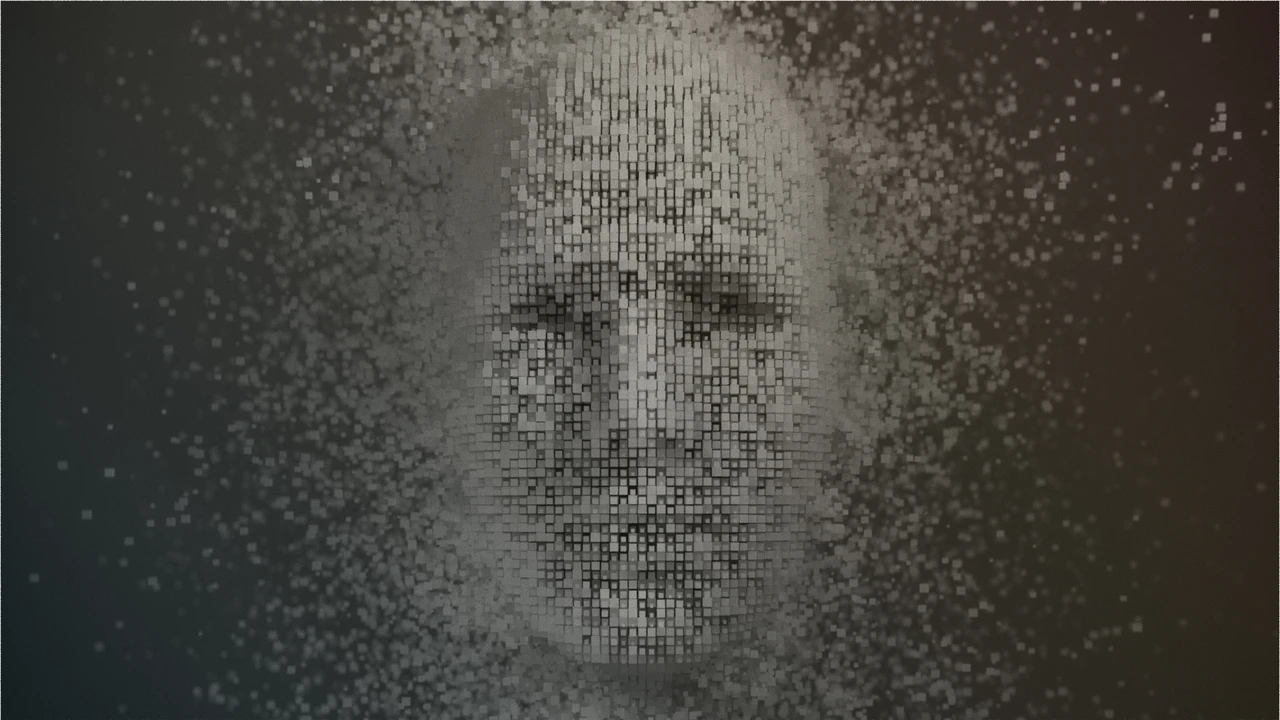
The Simulation Theory Framework: Philosophical Foundations, Computational Physics, and Empirical Tests
The Simulation Theory Framework posits that physical reality—including space, time, matter, and conscious experience—is an artificially generated computational construct managed by an advanced intelligence or posthuman civilization. Formally framed by philosopher Nick Bostrom in 2003, the hypothesis has grown from a philosophical thought experiment into an interdisciplinary domain spanning quantum mechanics, information theory, and computational cosmology.
Philosophical Foundations & Precursors
Before modern digital computation, philosophers explored the possibility that perceived reality is an illusion or artificial projection:
-
Plato's Allegory of the Cave (c. 375 BCE): Explores the concept that human sensory perceptions are merely shadows projected on a wall, representing a lower-dimensional projection of fundamental reality.
-
Zhuangzi's Butterfly Dream (c. 3rd Century BCE): Raises the epistemological question of whether one can definitively distinguish between awake experiences and simulated mental states.
-
Descartes' Evil Demon (1641): A thought experiment asserting that an all-powerful entity could fabricate all sensory inputs, casting doubt on the certainty of the physical world.
The primary philosophical pillar of modern Simulation Theory is Substrate Independence. This theory in philosophy of mind asserts that consciousness supervenes on functional computational structures rather than organic carbon-based neural networks. If a computational system executes the appropriate algorithms, conscious awareness emerges regardless of whether the physical hardware is biological tissue or silicon microchips.
Bostrom's Trilemma: The Modern Formulation
In 2003, Oxford philosopher Nick Bostrom published "Are You Living in a Computer Simulation?", transforming the concept into a rigorous probabilistic argument.[1]
The Trilemma Equations
Bostrom demonstrated that at least one of the following three propositions must be true:
-
: The fraction of human-level civilizations that reach a "posthuman" technological stage capable of running ancestor-simulations is virtually zero. -
: The fraction of posthuman civilizations interested in running ancestor-simulations of their evolutionary history is virtually zero. -
: The fraction of all human-type conscious minds living in a computer simulation is extraordinarily close to one.
Mathematical Scale & Statistical Probability
If propositions (1) and (2) are false, it follows that posthuman civilizations possess immense computational resources and elect to deploy them.
-
A single planetary-mass computer (such as a Matrioshka brain) could execute upwards of
operations per second. -
Simulating a human mind at the neural level requires approximately
to operations per second. -
Consequently, a single advanced computing system could execute billions of simulated human lives in fractions of a second.
Because simulated conscious minds would outnumber biological base-reality minds by an astronomical ratio, a typical conscious observer is statistically almost guaranteed to reside inside a simulation.
Computational Physics & Structural Analogies
Advocates of digital physics argue that fundamental physical laws exhibit features remarkably similar to optimization algorithms in software design:
| Physical Phenomena | Computational Analogy | Operational Purpose |
|---|---|---|
| Planck Length & Time | Discrete Grid / Pixelation | Prevents computational overflow by establishing a finite spatial-temporal resolution limit. |
| Speed of Light ( |
Processor Clock Speed | Imposes a maximum processing and data-propagation speed across the spatial grid. |
| Quantum Wavefunction Collapse | Occlusion Culling / Lazy Rendering | Saves computational load by rendering definitive particle states only upon observation/measurement. |
| Information Codes | Error-Correction Algorithms | Preserves consistency across equations (e.g., supersymmetry adinkra codes). |
The "It from Bit" Doctrine
Physicist John Archibald Wheeler popularized the phrase "It from Bit", hypothesizing that every physical item, particle, and field in the universe ultimately derives its existence from binary digital information. Under this paradigm, information is the fundamental primitive of existence, with matter and energy serving as secondary emergent phenomena.
Empirical Tests and Scientific Proposals
Contrary to claims that Simulation Theory is inherently unfalsifiable, researchers have proposed empirical experiments to detect potential computational constraints or signatures.
1. High-Energy Cosmic Ray Lattice Cutoffs
In 2012, physicists Silas Beane, Zohreh Davoudi, and Martin Savage evaluated whether the universe is simulated on a discrete spatial lattice.[2] They demonstrated that a space-time grid would break rotational symmetry at extreme energies. This rotational asymmetry would be detectable in the directional distribution of ultra-high-energy cosmic rays exceeding the Greisen-Zatsepin-Kuzmin (GZK) limit.
2. The Second Law of Infodynamics
Physicist Melvin Vopson formulated the Second Law of Infodynamics, asserting that information entropy in physical and biological systems minimizes or remains constant over time—behaving like digital data compression.[3] Vopson proposed that this systemic data compression reduces computational storage requirements, mirroring optimization techniques used in simulated virtual environments.[4]
Vopson's theoretical framework extends Mass-Energy Equivalence (
Counterarguments & Theoretical Limitations
-
Exponential Quantum Complexity: Simulating quantum systems on classical computers requires memory that grows exponentially with particle count (
). Research demonstrates that simulating certain quantum Hall phenomena classically is intractable due to the quantum sign problem, requiring computational resources larger than the observable universe. -
The Infinite Regress Problem: If civilization
simulates civilization , which in turn reaches posthuman status and simulates civilization , each nested simulation incurs computational overhead. This creates an infinite regress that eventually exhausts the energy budget of the baseline physical universe. -
Falsifiability Criteria: Critics argue that if the "simulators" possess god-like capabilities to alter physical constants or patch detected anomalies, the hypothesis risks becoming unfalsifiable, moving outside the boundary of Karl Popper's definition of scientific inquiry.
Resonant Notes
The following notes in the vault resonate with themes in The Simulation Theory Framework:
- The Digital Mirror and the Lotus — Explores substrate independence and whether silicon-based computation could yield conscious experience, directly engaging with the simulation hypothesis's core premise that consciousness can emerge from non-biological computational substrates.
- Gestalt and Buddhism-Reality Construction — Argues that perceived reality and the self are cognitive constructions — a simulated ego generated by the mind's grouping mechanisms, structurally parallel to the idea that subjective experience is a rendered simulation.
- Defining a Simulacrum — Baudrillard's hyperreality: the copy that precedes and replaces the original, structurally parallel to living in a simulation where the "original" base reality may be inaccessible or may not exist at all.
- Boltzmannian Coarse-Graining and Nagarjunian Emptiness — References the Pleromic Causal Simulation Model (PCSM), which formalizes reality as a computational information-theoretic construct, and explores relational quantum mechanics as an informational framework.
- The Block Universe (Aliases-Eternalism, Spacetime, Illusion of Time) — The Block Universe model aligns with simulation theory: if all moments exist simultaneously on a "disc," the feeling of temporal flow could be a rendering artifact of consciousness within a static computational structure.
- The Universe in a Single Drop-Fractals, Indra's Net, and Cosmic Recursion — Fractal recursion and Indra's Net mirror the nested simulation regress problem — simulations within simulations within simulations, where each part contains the whole.
- Information Networks and the Architecture of Social Order — Hoffman's Interface Theory of Perception (Fitness Beats Truth theorem) argues evolution selects for useful fictions over objective reality — a biological simulation interface that hides true reality behind a functional veil.
- The Matter With Things Analysis — McGilchrist's exploration of whether the brain is a generator or transducer of reality directly parallels the simulation hypothesis's epistemological questions about the nature of perceived reality.
- Bergson’s Eliminative Model of Perception and Memory — The brain as a "reducing valve" that filters reality rather than generating it — consciousness as an interface to a larger simulated or non-physical reality, supported by Default Mode Network research.
- Two Kinds of Nothingness-Astrophysics and Buddhist Philosophy — Distinguishes physical space from ontological emptiness (Śūnyatā); relevant to the question of what the "base reality" underlying a simulation might be.
- Dimensional Containers and the Fabric of Reality-The Divergence of Space, Void, and Emptiness — Explores the convergence of quantum mechanics and Buddhist metaphysics, both of which inform the simulation hypothesis's relational ontology and the nature of the substrate.
- Media Theory Concept Research — McLuhan's tetrad and the idea that media environments become invisible — we are somnambulant within our simulated reality, unable to perceive the medium itself, just as simulated beings cannot detect the computational framework.
References
Nick Bostrom / Are You Living in a Computer Simulation? / Philosophical Quarterly ↩︎
Silas R. Beane, Zohreh Davoudi, Martin J. Savage / Constraints on the Universe as a Numerical Simulation / arXiv:1210.1847 ↩︎
Melvin M. Vopson / The second law of infodynamics and its implications for the simulated universe hypothesis / AIP Advances ↩︎
Melvin M. Vopson / Dr. Melvin Vopson on Information Physics and the Simulated Universe / YouTube ↩︎